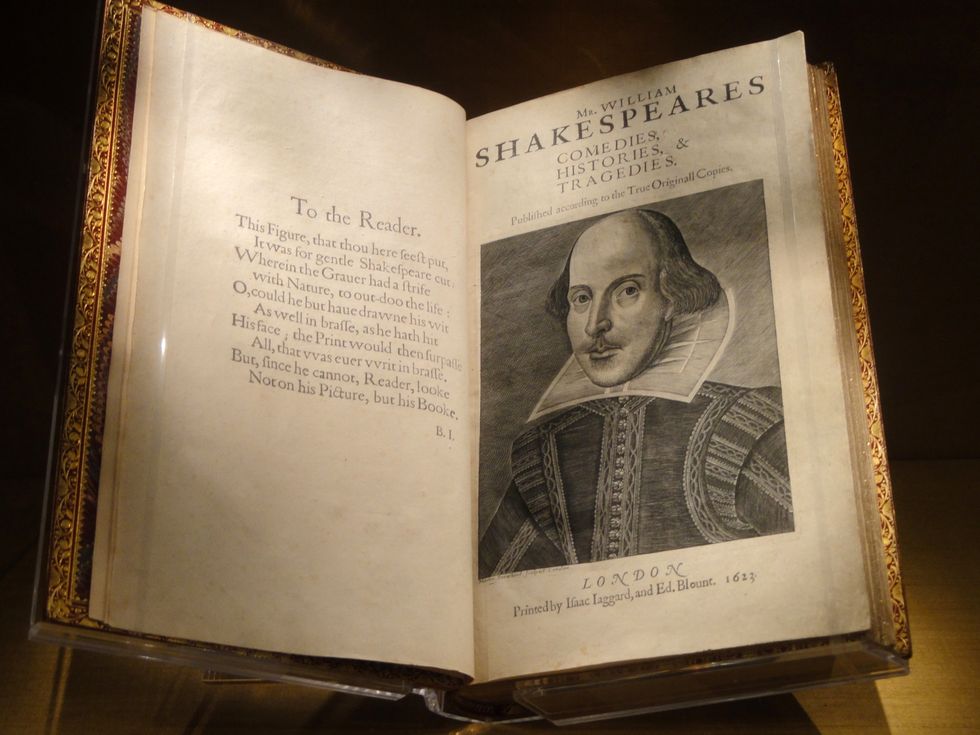
1. Film

Movies such as "She's The Man (Twelfth Night)," "My Own Private Idaho (Henry IV)," and "West Side Story (Romeo and Juliet)" were all based off of Shakespearian plays. Filmmakers will often take elements of Shakespeare's plots or remake them entirely into modern movies. The themes of these plays are also taken upon by directors; the idea of star-crossed lovers that stems from "Romeo and Juliet" is one of the more common ones.
2. Literature
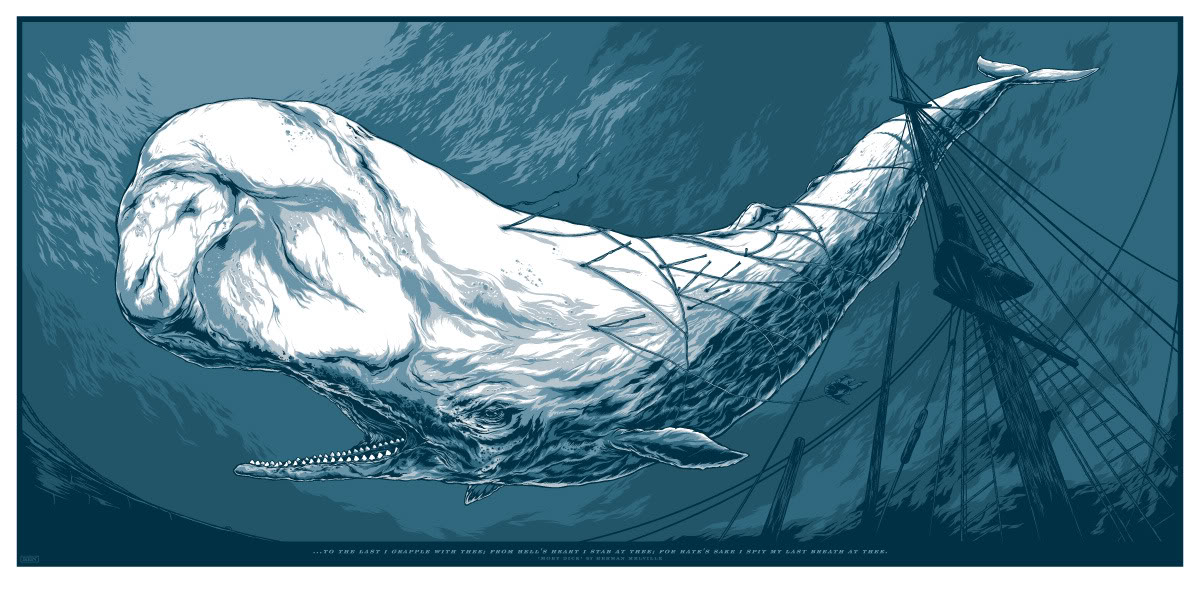 Many of Shakespeare's lines have been used as titles for modern books, and his influence on literary plot lines is indisputable. "Brave New World" by Aldous Huxley, "The Winter of Our Discontent" by John Steinbeck, "Something Wicked This Way Comes" by Ray Bradbury, and "The Sound and the Fury" by William Faulkner all have references to Shakespeare as their titles. The novel "Moby Dick" by Herman Melville was also influenced by Shakespeare, the main character Ishmael acting in ways that mirror Shakespeare's "Hamlet."
3. Education

In almost every high school and even in some middle schools, English class usually includes Shakespeare. I read "Julius Caesar" in eighth grade, "Romeo and Juliet" in my freshman year, "Othello" in my sophomore year, and "Macbeth" in my senior year. I have already read "Richard III" and "Henry IV, Part 1" in my Shakespeare class this year. These plays have dynamically changed the way we hold our English classes. In this way, Shakespeare's works will forever shape the way English literature is taught.
4. Insults
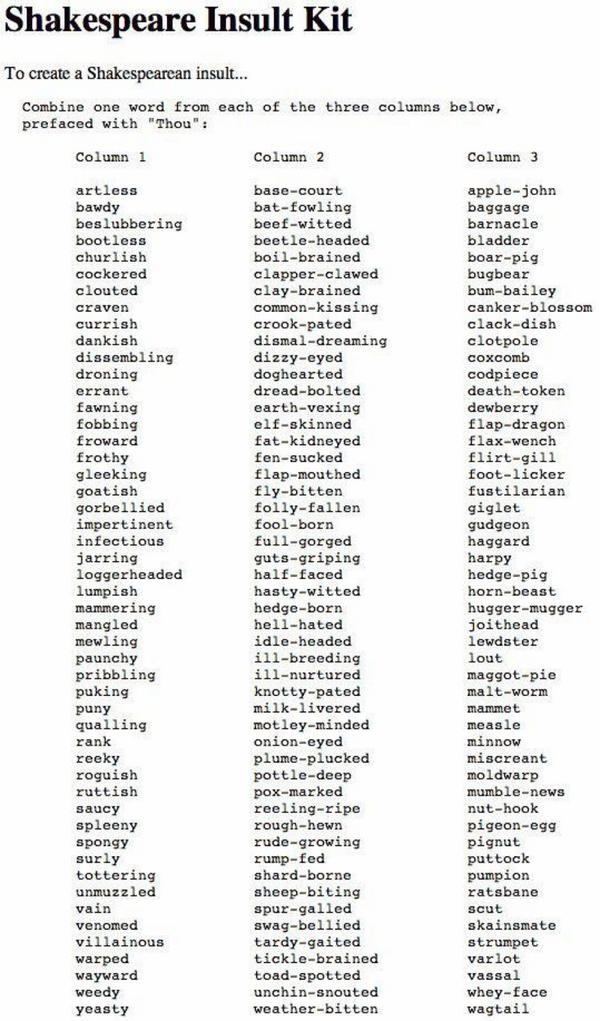
Refer to the picture above, thou qualling swag-bellied pigeon-egg! Thou lumpish clay-brained flap-dragon!
5. The English Language

Shakespeare introduced over 1700 words to the English language. His coined words and phrases are some of our most common ones, in fact. These words and phrases, though common to us, were new to audiences back in his day. For example, if you ever say something is as "dead as a doornail," wait "with bated breath," "break the ice" when you're meeting new people, or go on a "wild goose chase," you can thank Shakespeare!