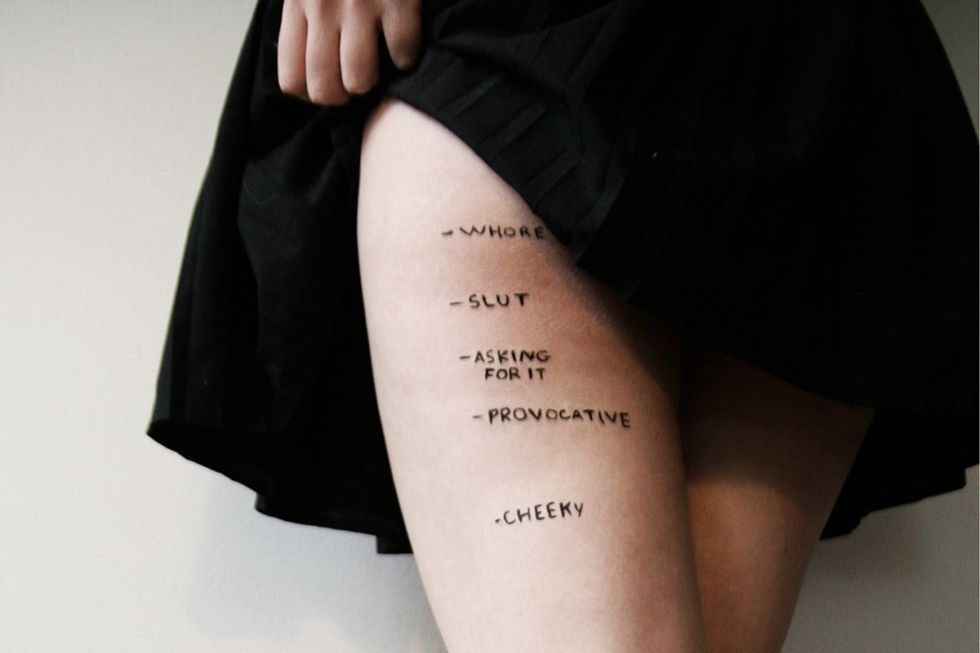
Dress codes follow us through life. Our first experience with them usually occurs in school. Between work, the gym, occasional black-tie events, or country club visits, most of us still abide by them in adult life. There's no arguing that they do help keep the environment a professional and comfortable one. However, dress codes have been under fire recently by many students, parents, and even teachers for their unnecessary and unfair policies.
Obviously, the idea of a dress code isn't inherently bad. There is a difference between modesty and decency. Policies that prevent indecent attire, such as clothes with vulgar words, culturally appropriated outfits, swimwear, or excessively revealing clothing are understandable and, arguably, necessary. The problem with dress codes begins when the policies feed into the massive sexism and racism that already dominate so many aspects of society. In my experience, it's the girls, not the guys, who face most dress code violations. Shorts are "too short," shirts are "too revealing," leggings are "too tight," afros or cornrows are "too distracting", the list goes on. I'm not talking about booty shorts that show underwear if you bend down or pulling off a bralette as a shirt. I'm talking about the type of apparel anyone would find by walking into any clothing store. Most shorts for sale don't fit the standard "fingertips" rule enforced at most schools. Leggings are no different than skinny jeans (provided that they aren't see-through), yet they have stirred up quite a controversy. Summer fashion often consists of tank tops, bandeaus, or strapless tops. Provided that shirts aren't falling down or see-through, I'm having trouble understanding why these are deemed "unacceptable" in many schools.
Are these policies in place to keep students looking clean, presentable, and professional? Then schools should also ban sweatpants, over-sized T-shirts, and other overly-casual attire. Are they to provide a comfortable and safe environment for all members of the community? Then explain to me why faculty or other students feel uncomfortable with seeing a female student's shoulders or the shape of her body in a tight shirt or leggings. It's hard to do this without using a sexist justification based off some combination of female body objectification and sexualization. Modesty doesn't prevent men's inappropriate behavior, but forcing modesty onto women allows a sexist attitude to permeate through the walls of the school.
And the clothes are just one part of the issue. African American girls have been punished for wearing their hair naturally or in braids. Two students at Mystic Valley Regional Charter School, located in Massachusetts, were required to serve detention and kicked off of their sports team for wearing braided hair because it was "unnatural." This policy (and similar ones) is an example of how the widespread systemic racism that runs rampant across many walks of United States policies found its way into the way people are allowed to look.
When I was in fifth grade, many girls wanted to get a temporary pink hair extension in October to raise awareness for breast cancer. My school banned this and required that all girls cut out their extensions within a certain time or face a disciplinary punishment. Most of the girls had gotten them on the back of their head on the undermost layer of hair, not visible unless hair went up in a ponytail. I don't see how a pink hair strip interferes with learning. If anything, enforcing this policy created more of an interruption and generated more stress than the presence of a pink hair strip.
Makeup presents another issue. Many middle school dress codes forbid students to wear makeup. While it is completely valid for people to believe that girls this young should not be wearing makeup, that seems like a decision the parents - not the school - should be making.
It's not the clothes, the hair, or the makeup that are actually causing the controversy over dress codes. It's the permissive objectification present in the undertone of these dress codes that imply women's bodies are a distraction and a justification for inappropriate behavior. This leads to an acceptance, rather than a challenge to, the racism and sexism that women face every day.