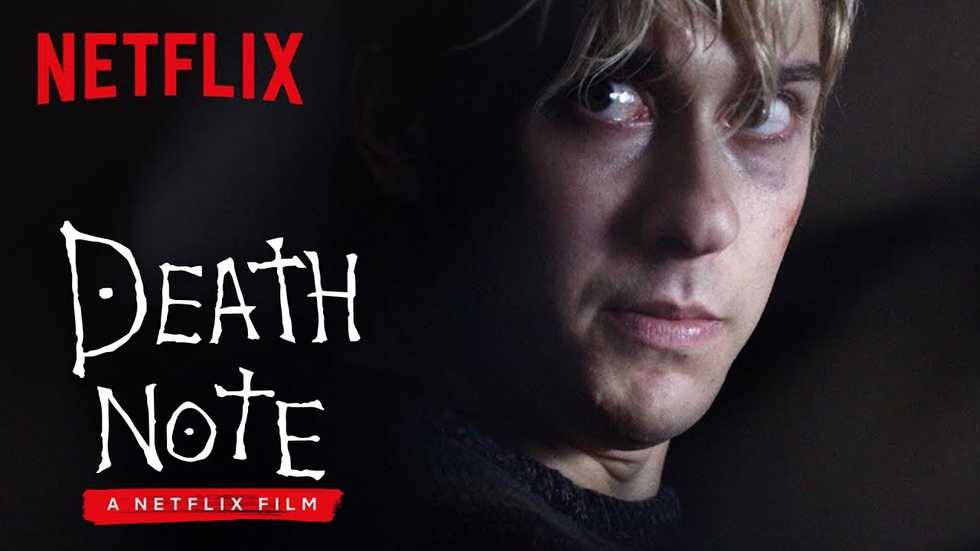
Before you read any further, I warn that this article contains spoilers to Netflix's Death Note as well as the Anime and manga of the same name.
Ah, the dreaded live action adaption of the worldly renounced anime and manga Death Note finally hit Netflix this past week. I was incredibly skeptical, knowing the pattern of American remakes from many past movies, however I was still reluctant to give it a shot. I have to say, I was right about my judgment. The movie had so many flaws and various issues and was doomed to fail. It is a difficult task to adapt something so beloved and keep all the essence of the original preserved. I also acknowledge that is is hard to cram all 36 episodes of the anime worth of content into a movie less than two hours in run time. I think it's also valid that sometimes, you will not be just able to satisfy the fans no matter how hard you try. But regardless of all these tangents, I still could not bring myself to love this movie.
So many YouTube videos are posted about the faults of this movie. I can name a few on the top of my head from poor acting, no character development, and a loose plot solely based on the premise of the concept of Death Note itself. If you want to explore more in-depth to more of the technical aspects, I listed some videos where you can freely explore other people's opinion on why the movie failed.
Now to add some of my personal criticisms to the mix. I can continuously nitpick the various aspects of this movie that contradicts it from being a great film, even an enjoyable film. I can write about how the characters were flat, unlikable. The character L was completely useless and incompetent in the movie. I can discuss the weak story plot and typical cliche teenage romance being the highlight, rather than a philosophical debate. I can argue that this movie had excessively gory death scenes. I can do all of this, but I won't. What I will be discussing is; the lack of duality between and in the characters.
What is Duality in Death Note?
Death Note has a whole has been always a story of duality in my opinion. The constant rivalry of L and Light. The transition of Light from a moral figure, to someone who is blinded by his sense of justice. The constant fight and push of two sides has been a major plot point in the anime and manga. It is what drove the story, what made Light an enjoyable protagonist.
However, I don't mean that everything in the story was black and white. The ambiguity in the element of duality was also present in the original story as well. The character Light displays this the best with his justice often going over the line of spectrum in good and evil. Ryuk has truly been the only nonbiased, one-sided character in the story, simply following Light due to his interest in witnessing something fun.
Now, this is where the problem with the film comes into play. The topic of duality is completely missing in the film. I'm not saying that there are no sides in the movie because there certainly is but the concept of duality within an individual is lacking. Throughout the whole movie, Misa is the one portrayed as the 'evil' one and Light makes no contempt to cross the line of his morals ever. This is a poor choice of character development. In the original source, this transition is a key moment where Light steps beyond a figure of real justice. Up until this moment, Light has been killing with a cause and a purpose. Light makes the choice to kill the FBI agents because he deemed them an obstacle along the way of achieving his goals. In the movie, Misa is the one who makes this choice, not Light. This blinds the audience into separating the good and evil to Misa and Light, when it the focus should be entirely on Light himself.
Death Note focuses heavily on that internal conflict Light has faced throughout the series and the Netflix adaption dismisses that aspect completely. In a story, a conflict is the cause to drive the story into the climax. Yes, there were multiple conflicts in the film of Light not wanting to kill his father, his battle against the unlikable L, and his fallout with Misa, but the main battle was not present; the battle against oneself. In the three main classifications of conflict, Death Note is very much a story about man against himself. With that conflict gone in the film, an individual feels unsatisfied with the climax. How can I be content with the ending when I cannot agree with the climax itself?
The live adaption felt short in many perspectives and I was obviously discontent with how it was interpreted. Interpretation of a source material is entirely up the director of the film. However it is also our interpretation to point out the flaws and faults of the movie until hopefully one day, they can do it right.