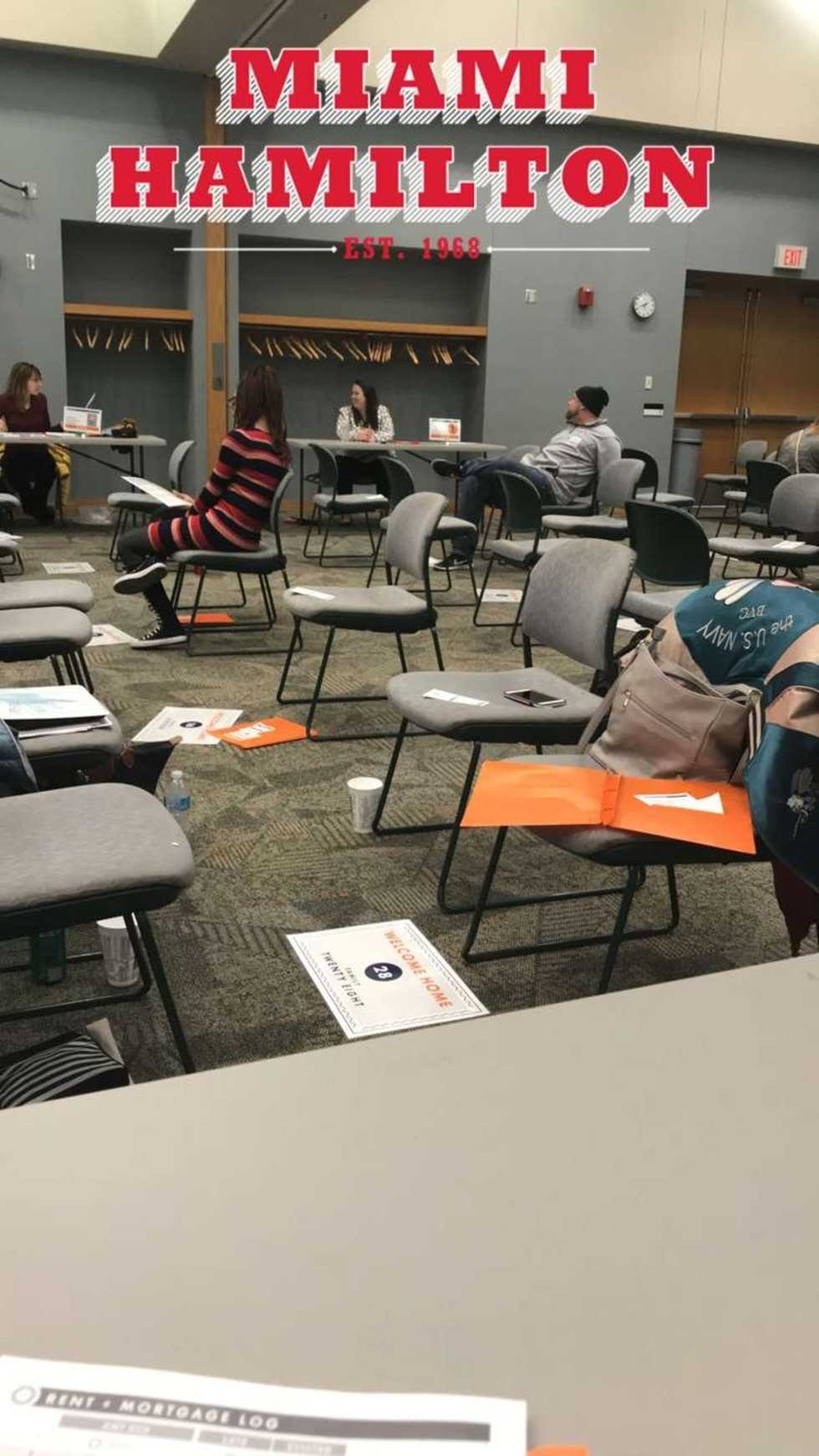
What is C.O.P.E.?
C.O.P.E. stands for the Cost Of Poverty Experience. It is a simulation experience that tries to show what it is really like to be a low-income individual or family. C.O.P.E. was developed by Think Tank Inc. and The Caresource Foundation with influence from actual low-income families. It is an eye-opening experience, especially for those that have never experienced poverty themselves or who want to be more educated about what it's actually like to be impoverished.
There are 4 different editions of C.O.P.E. There is a college edition that appeals to educators and those coming into college, a faith edition, a reentry edition that can be helpful to those that have been incarcerated and a youth edition to help youths comprehend poverty. The logistics of the experience are as follows: the "month" is broken down into four 15 minute "weeks."
There are 15 real-life scenarios for participants to go through and 15 community resources. Some of these include: a homeless shelter, a wellness center and community and human services. Participants are given a folder containing their identities and resources. Families must then work together to get through everything that happens in the everyday life of an impoverished citizen: probation, working, paying for food, transportation, fate, medical issues, etc.
I have taken part in C.O.P.E. as a volunteer or as a participant for three years. Every year, I come away from it with a new perspective and new feelings toward the impoverished and what they go through in a normal day. This was my first year as a volunteer, and being a volunteer was something I didn't imagine would be challenging. I had never really thought about the emotions that those that have to turn people away who are asking for help (due to closing time, capacity being met, etc.) would go through. Even though this was just a simulation experience, it was difficult for me to say no to the participants.
After the activity was complete, the volunteers and participants gathered together to have a reflection discussion. The facilitator asked some questions that really got us pondering. Some of the ones that stuck out were:
Did you do anything fun as a family?
Did you help your neighbor when they struggled?
Did you ask for help at all when you struggled?
The group discussed how the "middle class" set the norms and that doing something fun with your family is required, and if you don't, you're a "bad family." We all discussed how much living in poverty impacts how you get through the day. Planning isn't usually an option and focusing on the present is all you can do. One participant stated that she felt she was neglecting her family and that her children spent a lot of time alone, but all she was doing was what she had to do to make sure her family had food on the table and clothes on their backs.
Another participant said that even if she had a chance to get out of her low paying job to get a better one, she would lose her child care and be right back where she started; it's a never ending spiral down. Many participants said that they started out their first week in a good and optimistic mood, but by the end of week three they were angry and overwhelmed by the fact they could never get everything done they needed to. Our closing comments were a bit daunting:
"Most of those that work for the government got into their professions to help the public and they feel so helpless when they can't give those in need all they needed. It was painful."
"I did everything right according to the 'American Dream'. I had a job, a car and a house and still ended up with nothing because of my health problems. Situational poverty is real and isn't recognized enough."
"Just because someone is living in poverty doesn't mean they are lazy. They may not know how to navigate the system or may have just a hit a speed bump and haven't been able to get past it. This experience really helped me see that and will help me be a better person from here on out."
If you are interested in being a volunteer or a participant in C.O.P.E., visit www.thinktank-inc.org to learn how to bring it to your community or to become a licensed facilitator. You will not regret it.