Instructions on how to blend watercolor paint. I go in depth with colors and a little technique.
Necessary Supplies:
- Watercolor palette
- Paintbrushes or brush pen
- Sponge or paper towel
- Watercolor paper (printer paper does work)
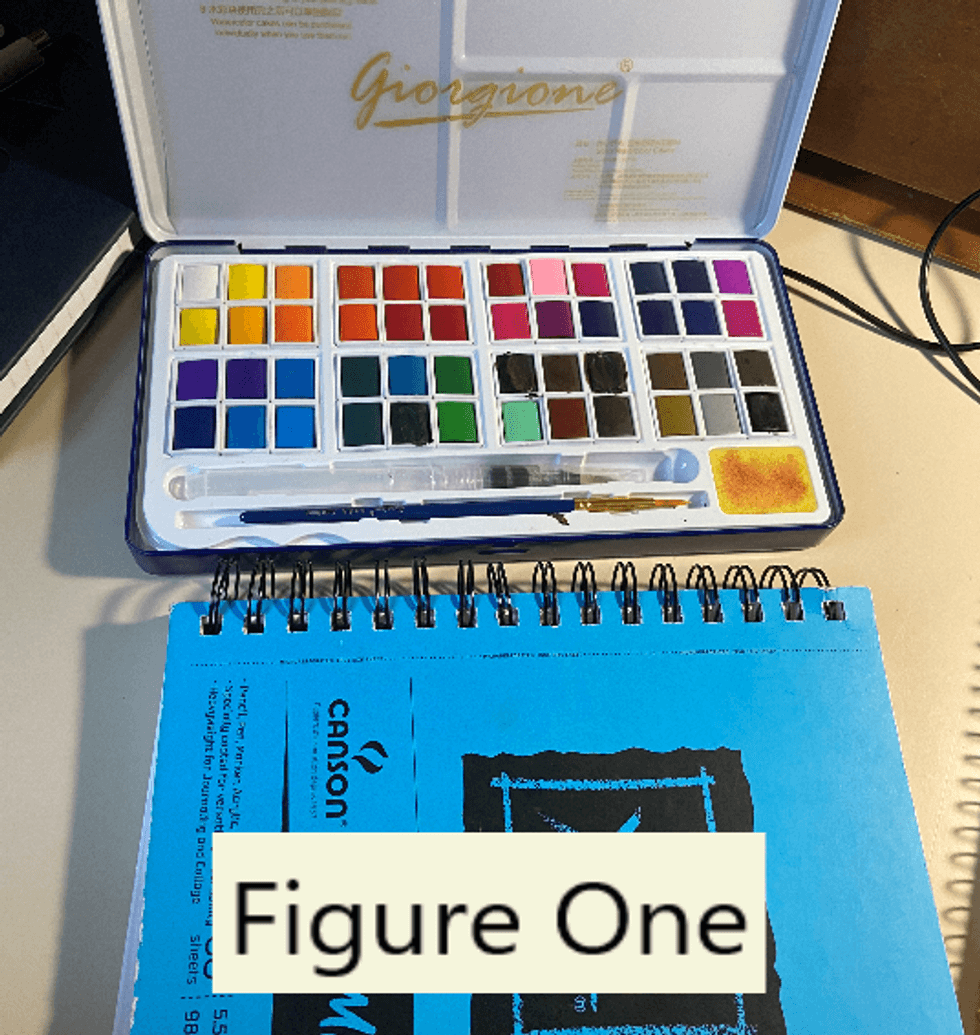
- 1. First, begin by gathering your supplies and readying your workstation. Your workstation can be a desk, kitchen counter, dining table, or coffee table. I am using the Yooson Watercolor Palette (pictured); however, you can use any watercolor palette except Crayola with these instructions.
- a. Open the palette, take out the brush pen, and paintbrush. Fill up the brush pen if you are using it to paint with.
- b.The Yooson palette comes with a sponge, but I suggest using a paper towel. These supplies are used to wipe away excess water and paint.
- 2.Now that you have your palette in front of you and the work area is set up. Now it is time to get the paper.
- a. The paper I used for this tutorial is the Mixed Media Paper. For best results do not use printer paper.
- b.The difference between them is that watercolor paper is thicker, and printer paper is thinner and warps when touched with water.
- 3. Mixing watercolors requires knowing the difference between complementary colors and non-complementary colors. Complementary colors are colors that when mixed make a brown or greyish green. non-complementary colors are colors that blend well together.
- a.Complementary colors include green + red, blue + orange, and purple + yellow.
- b.The list for non-complementary colors is long, but these are common color combinations blue + red, blue + purple, and yellow + blue.
- c.Mixing non-complementary colors give the best results when painting.
- b.The list for non-complementary colors is long, but these are common color combinations blue + red, blue + purple, and yellow + blue.
- a.Complementary colors include green + red, blue + orange, and purple + yellow.
- 4. Now that you know the basics, it is time to begin painting. Watercolor paint is simple if you do not use too much water.
- a. Squeeze the brush pen to get water onto the bristles. If you are using a regular paintbrush, dip the brush in water.
- b.Use a paper towel or sponge to wipe off excess water. Do not keep the brush soaked with the water, but do not dry it completely either.
- c.The goal is to have the brush wet enough to activate the paint and to allow it to be more saturated. The wetter the brush, the less pigment, and the dryer the brush, the more pigment.
- b.Use a paper towel or sponge to wipe off excess water. Do not keep the brush soaked with the water, but do not dry it completely either.
- a. Squeeze the brush pen to get water onto the bristles. If you are using a regular paintbrush, dip the brush in water.
- 5. Choose your first color. The first color should be lighter because lighter colors are easy to layer. Choosing a darker color first will make it harder to blend another color. The second color should be the darker color.
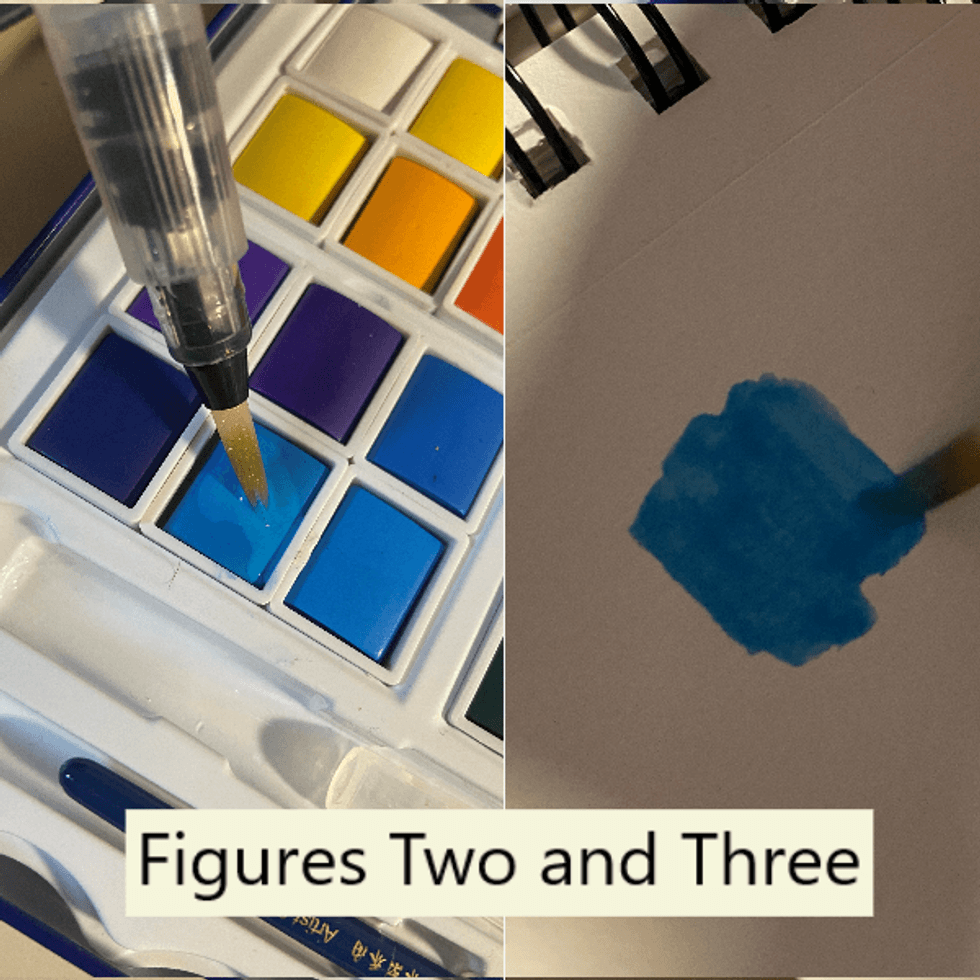
- a. Place down your first color. I put mine in a square, but you can do it the way you want to. (in pictures two and three.)
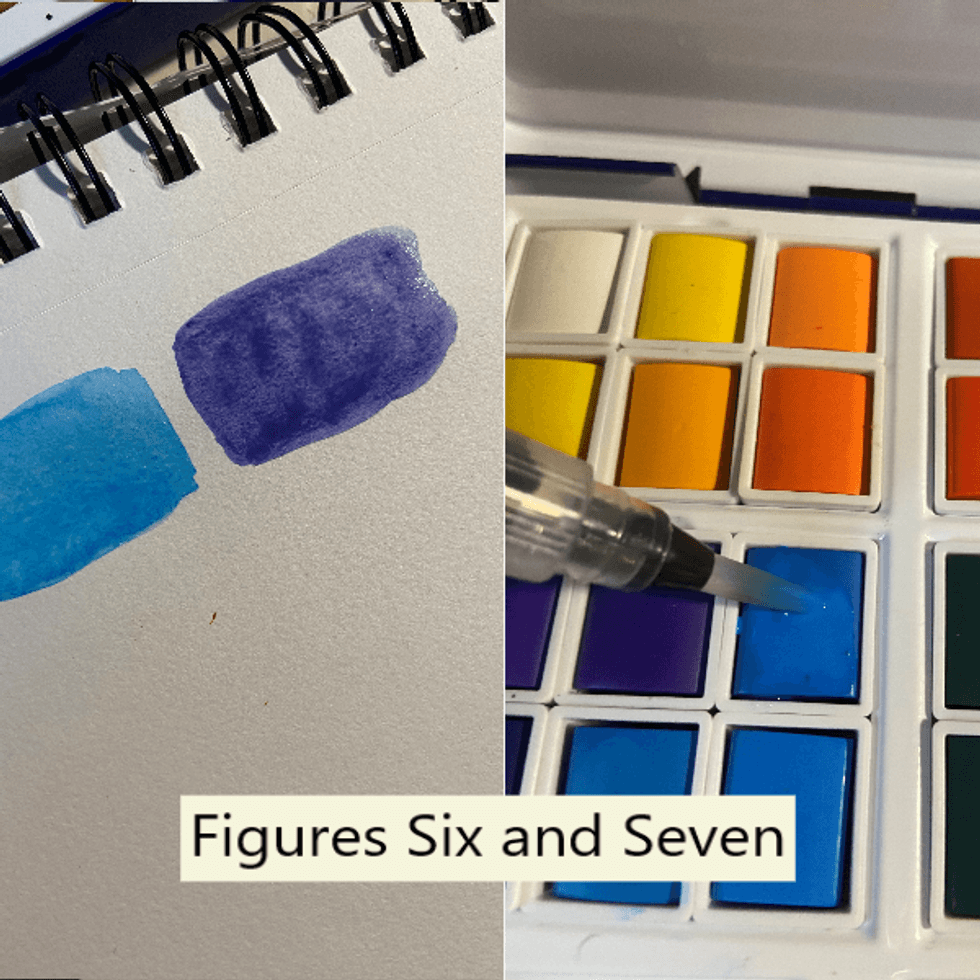
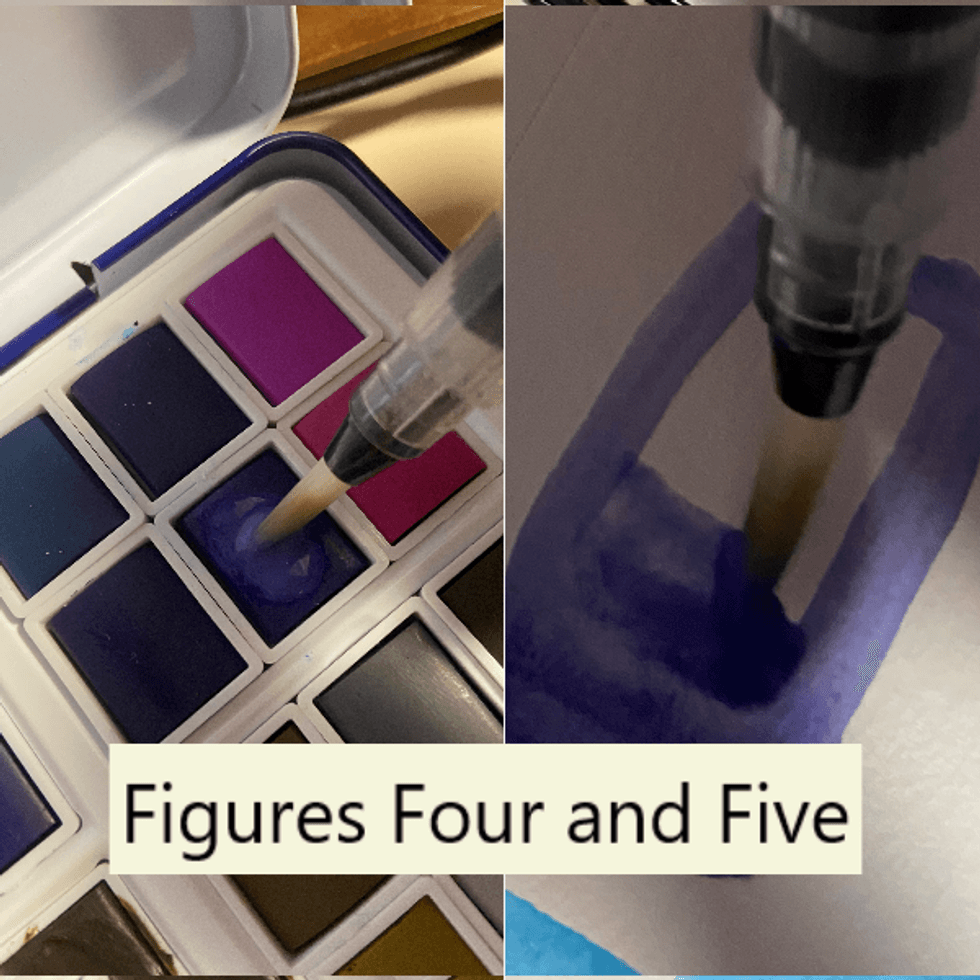
- b.Do not let the paint dry completely and place the second color beside the first color. Make sure to clean and dry off your brush in between. (in pictures four, five, six, and seven.)
- c.Do not blend them and add more water or paint if needed.
- b.Do not let the paint dry completely and place the second color beside the first color. Make sure to clean and dry off your brush in between. (in pictures four, five, six, and seven.)
- a. Place down your first color. I put mine in a square, but you can do it the way you want to. (in pictures two and three.)
- 6. The last step is blending the watercolors. It is not a tough thing to do with watercolors, and it is simple if done correctly. I chose a middle color to blend mine but that is optional.
- a. Put the color between the lightest and darkest shade. Using a little extra water, begin blending them. (color choice in picture eight.)
- b.Continue to blend them adding more paint and water if needed.
- c.I added a little bit of the lighter color with the darker ones to blend them, but that is optional.
- d.Once they are blended let them dry and make touch-ups if needed. (product is shown below.)
- a. Put the color between the lightest and darkest shade. Using a little extra water, begin blending them. (color choice in picture eight.)
You can apply the blending techniques to anything you do with watercolors. Just make sure the colors can blend. Practicing blending techniques will help make your paintings come to life.