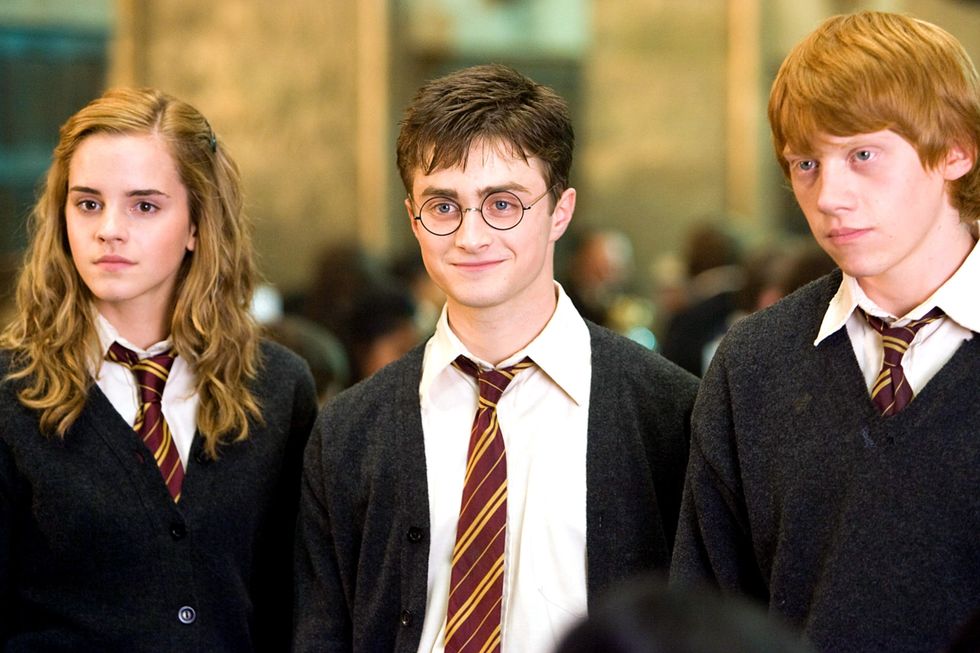
For many of us, "Harry Potter" was an intricate part of our childhoods. Between the multiple midnight movie premieres, pulling all-nighters reading the novels on the release date, and hounding over BuzzFeed and Sporcle quizzes trying to find one to actually stump us, there is no denying that J.K. Rowling’s wizarding world was one that took over our own.
As I’ve been doing my annual reading through the series, it’s dawned on me just how many details are embedded in the series to truly make it come to life. You would think that in a seven book series with hundreds of characters and multiple complex plotlines, there would be more than a few inconsistencies. But Rowling was somehow able to substantiate deep personality and emotion into her characters and utilize those to further her plotlines and create motivations for the next move.
While many fans spend their time trying to poke holes into the fabric of the "Harry Potter" universe, I just wanted to ask a few questions; questions that only affirm Rowling’s brilliance. There are so many ways that she could have expanded the series, and when fans ask and consider questions, it only helps to add legitimacy to her writing. So for my true "Harry Potter" fanatics, here are five questions to get any enthusiast’s cogs turning.
**Spoilers ahead. But also, the full series (and the corresponding movies) have been out for roughly a decade, so is there really going to be anything that surprises you?**
1. What would happen if dementors had kissed Harry? Would they suck out his soul, or would they actually get Voldemort’s?
We already know that the dementors had a particular interest in Harry. Lupin explained that this was because of the true horrors of Harry’s past that made him susceptible. Having two souls in his system probably didn’t help either. But if the dementors had actually gone as far as to kiss Harry, which soul would they have gotten? As we saw in the "Deathly Hallows," Voldemort’s was tied to his, so it’s possible that they could have both gotten sucked out. However, if we’re thinking more along the lines of Priori Incantatem, the most recent alteration to Harry’s soul would’ve been the first to show up.
2. Assuming that there were talking, moving paintings of the original founders at Hogwarts (like there were of past headmasters), would Salazar Slytherin’s be able to understand Parseltongue?

This could be a big reason behind why we didn’t ever see any tributes to the four original founders. The closest thing we have is the Grey Lady (Rowena Ravenclaw’s daughter).
But it stands to reason that there were some forms of homage, considering all of the former headmasters had moving paintings installed. And they all had their own consciousness still made alive; Armando Dippet, Phineas Nigellus, Dilys Derwent, Everard, and the witch with the ear trumpet are only some of the examples of paintings that made cameos when voicing their opinions to advise the current headmaster.
It seems evident that the paintings and their convictions are very similar to their real-life counterparts, which begs the question; did any Parseltongues retain that skill as paintings?
3. How likely is it that Harry is related (by blood) to other characters?
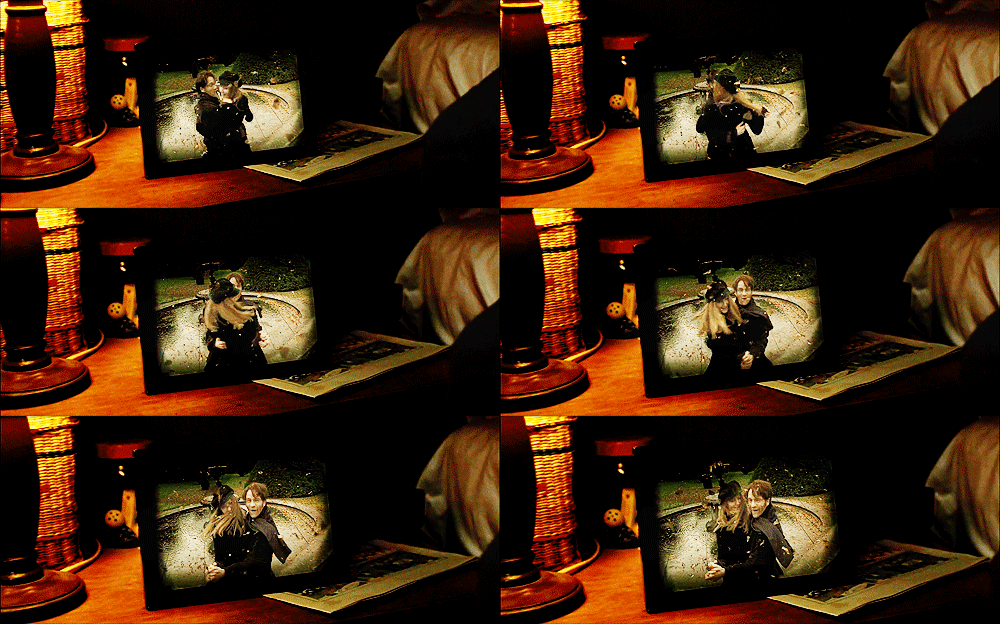
Although it’s obviously hard to trace Harry’s lineage (and unlikely to yield anything on Lily’s side of the family except for the very faint possibility of his relation to other half-blood students), James Potter’s full-blood status opens up a lot of possibilities for Harry’s ancestry. After all, England’s wizarding community is fairly compact, and it’s not uncommon for pureblood characters to mention their cousins or relatives. Sirius and Andromeda Tonks are cousins, as were Molly Weasley and Fabian Prewett.
Since Harry is an extended descendant from such a legendary figure as Ignotus Peverell, it wouldn’t be surprising if other people traced their lineage from one of the Three Brothers, and found their relationship to The Chosen One. Do you think any of them spoke up and reached out to Harry?
4. As we all know, Voldemort clearly didn’t want to be dependent on material objects for his immortality. But do you think it ever crossed his mind to exploit some easily corruptible forms of magic, such as taking Felix Felicis or using Time-Turners?

Tom Riddle was an incredibly intelligent young wizard—his meticulous planning and studious nature lent himself to be one of the most feared Dark wizards in history.
So we can assume that he knew about the lucky effects of Felix Felicis, or the potential to wreak havoc using Time-Turners. Imagine if he and the Death Eaters had taken Felix Felicis at the Battle of Hogwarts in the "Deathly Hallows;" it protected Ron, Hermione, Ginny, Luna, and Neville in the "Half-Blood Prince," so we know for sure that Felix is effective even in battle.
As an accomplished wizard, he would be able to brew a cauldron of liquid luck with ease, and he had Death Eaters (like Augustus Rookwood) who were employed at the Department of Mysteries who could have gotten him access to some seriously corruptible magic.
And though we know that Voldemort doesn’t like to rely on material things for his immortality (which still didn’t stop him from pursuing the Sorcerer’s Stone), but damn his reign could have really been enhanced by some helpful magic.
5. Did Dumbledore know about the acromantula colony in the Forbidden Forest?

A fairly common theme, especially in the earlier books, is that Dumbledore knows everything (more or less) that goes on at Hogwarts. And seeing as he’s the headmaster, it makes sense that he would know all of the intricate details about his school and its grounds. The possibility that he could be ignorant about the giant colony of terrifying spiders in the neighboring forest seems far-fetched, and inconsistent with what we know about him.
And if he did know about their presence, isn’t it fair that he would question why they were there (when they weren’t there earlier in his tenure), and forge the connection between them and the opening of Chamber of Secrets that culminated to Hagrid’s expulsion? Maybe this is why he was so steadfast in defending Hagrid, especially in conjunction with his general distrust for Tom Riddle.
What do you all think? Did J.K. Rowling subtly answer some of these questions in her writing? Or are these questions worth pondering and bringing to the attention of the queen herself?