American painter De Scott Evans (1847-1898) was known in his
lifetime as a painter of genre scenes depicting young woman in richly decorated interiors.
However, more than a half century after his death, trompe l’oeil paintings began to be
attributed to the artist. These paintings were signed in multiple pseudonyms, such as Scott
David, Stanley S. David and S.S. David and, for the most part, depict objects hanging on
planks of wood and inside wood cutouts behind planes of glass.
Although trompe l'oeil paintings have been painted since the time of Pompeii, Evans’ paintings of this style are a play on the well-known painters of the genre such as William
Michael Harnett and John Frederick Peto. Harnett's and Peto's work are loaded with imagery of objects cluttered on a table top, or hung on a door, while Evans' trompe l'oeil paintings are uncluttered and much simpler.
Misunderstood to this very day by museum visitors and art critics alike, Evans’ trompe l'oeil paintings are meant to be taken lightly and to poke fun at his contemporaries attempting to “fool the eye." Unlike other trompe l'oeil painters of the time, Evans took his paintings a step further and painted wood grain around the tacking edges of the canvas. The artist painted his artwork to "precisely" replicate what it was he was depicting. The following are a few of the trompe l’oeil paintings attributed to Evans.
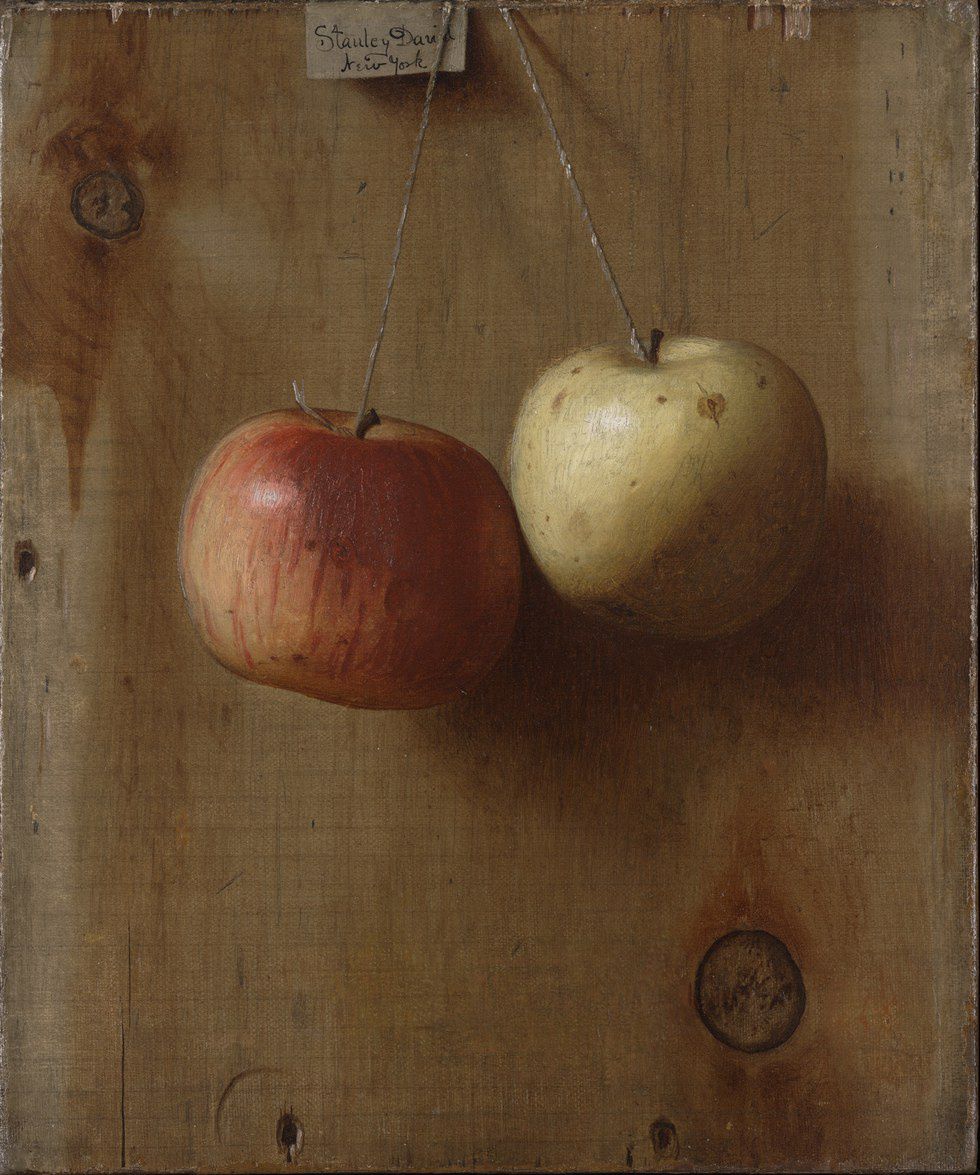 Two Hanging Apples c. 1890. Yale University Art Gallery.
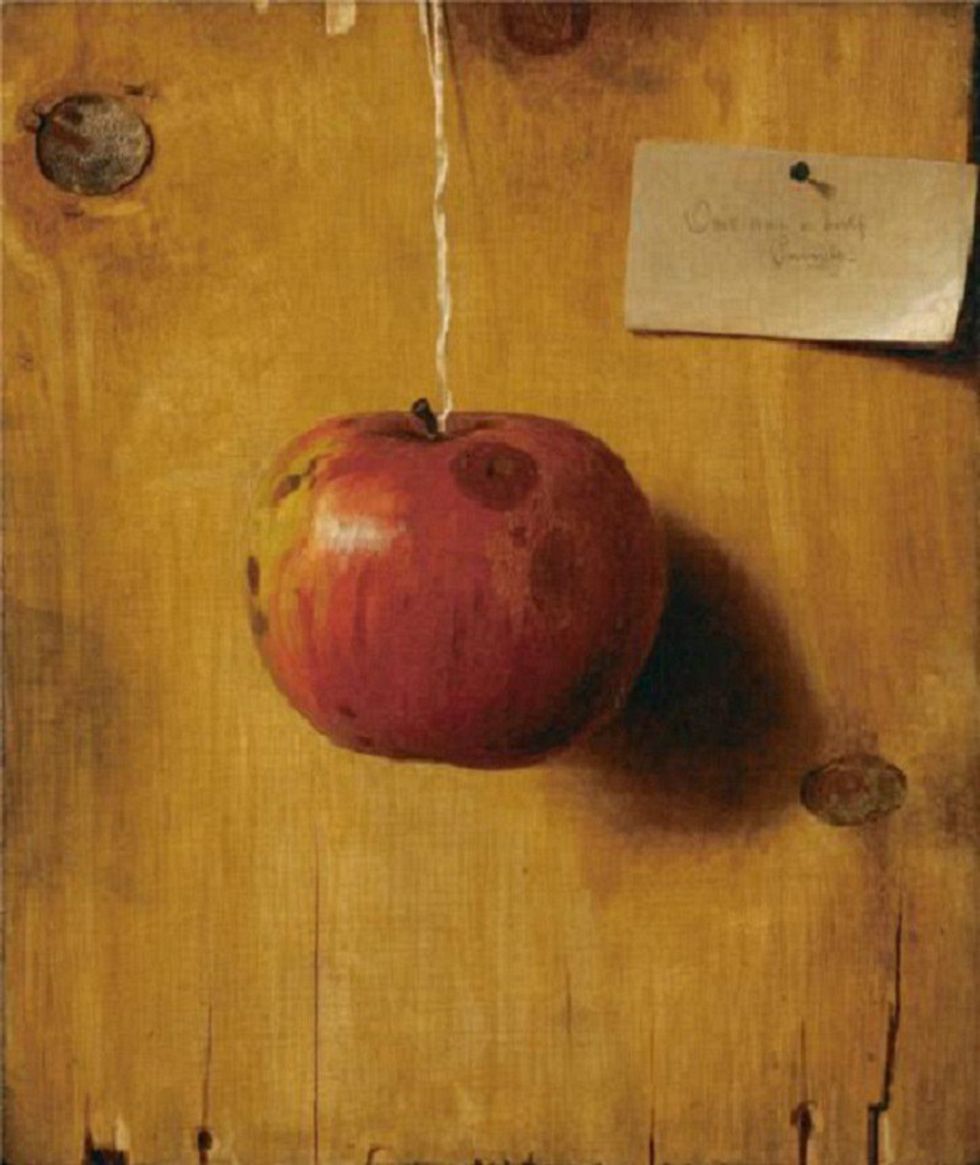 Still Life with Apple ca. 1890. The Nelson-Atkins Museum of Art.
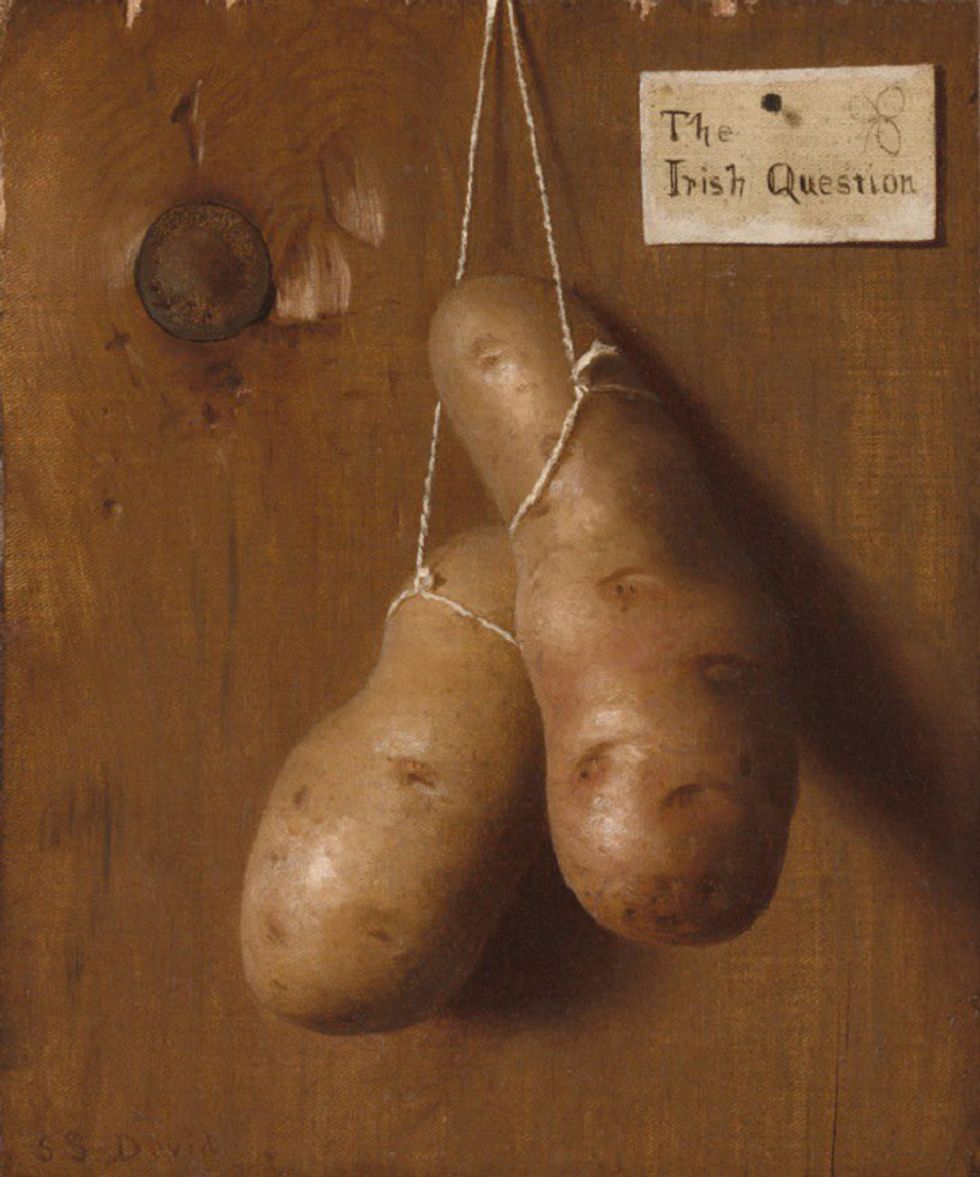 The Irish Question ca.1890. The Art Institute of Chicago.
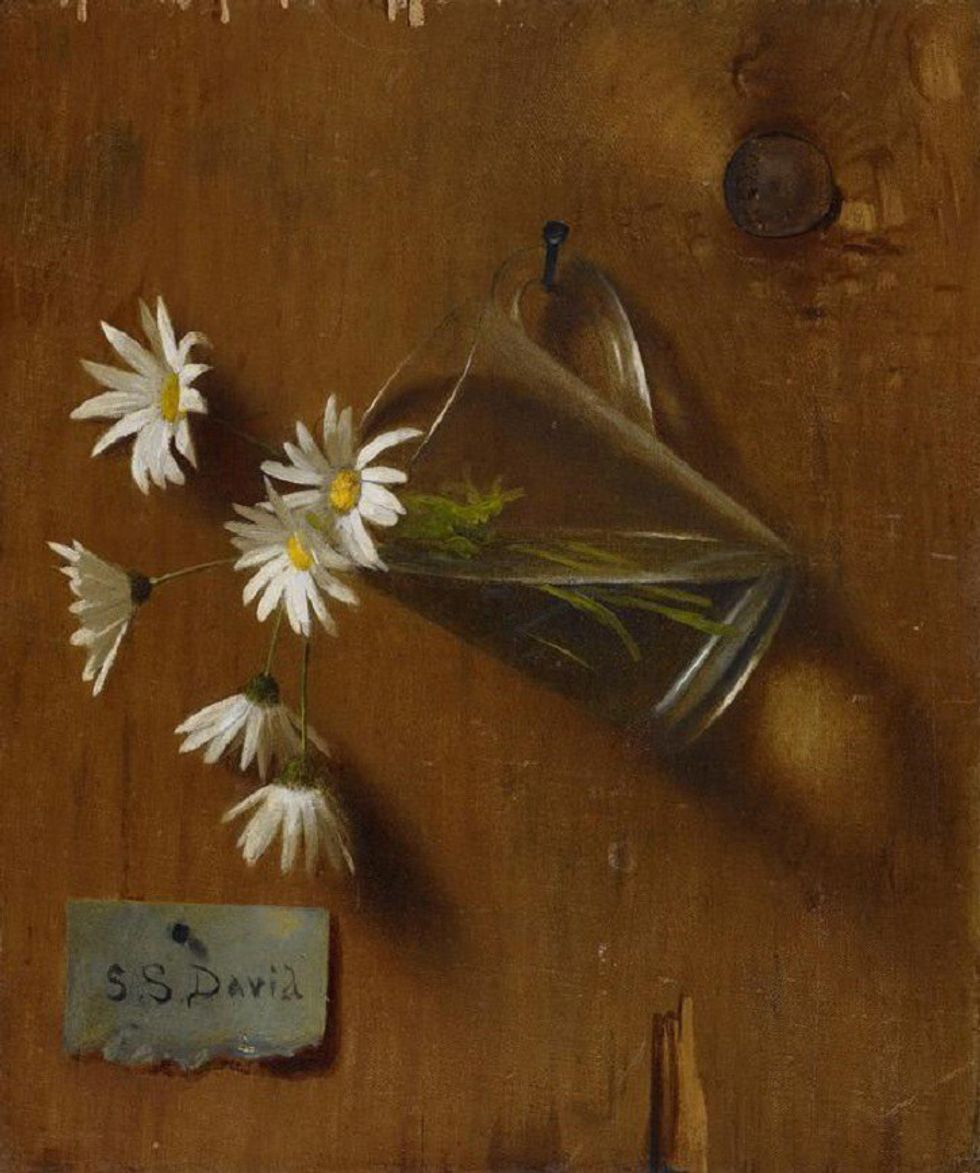 Daisies ca. 1890. Crystal Bridges Art Museum.
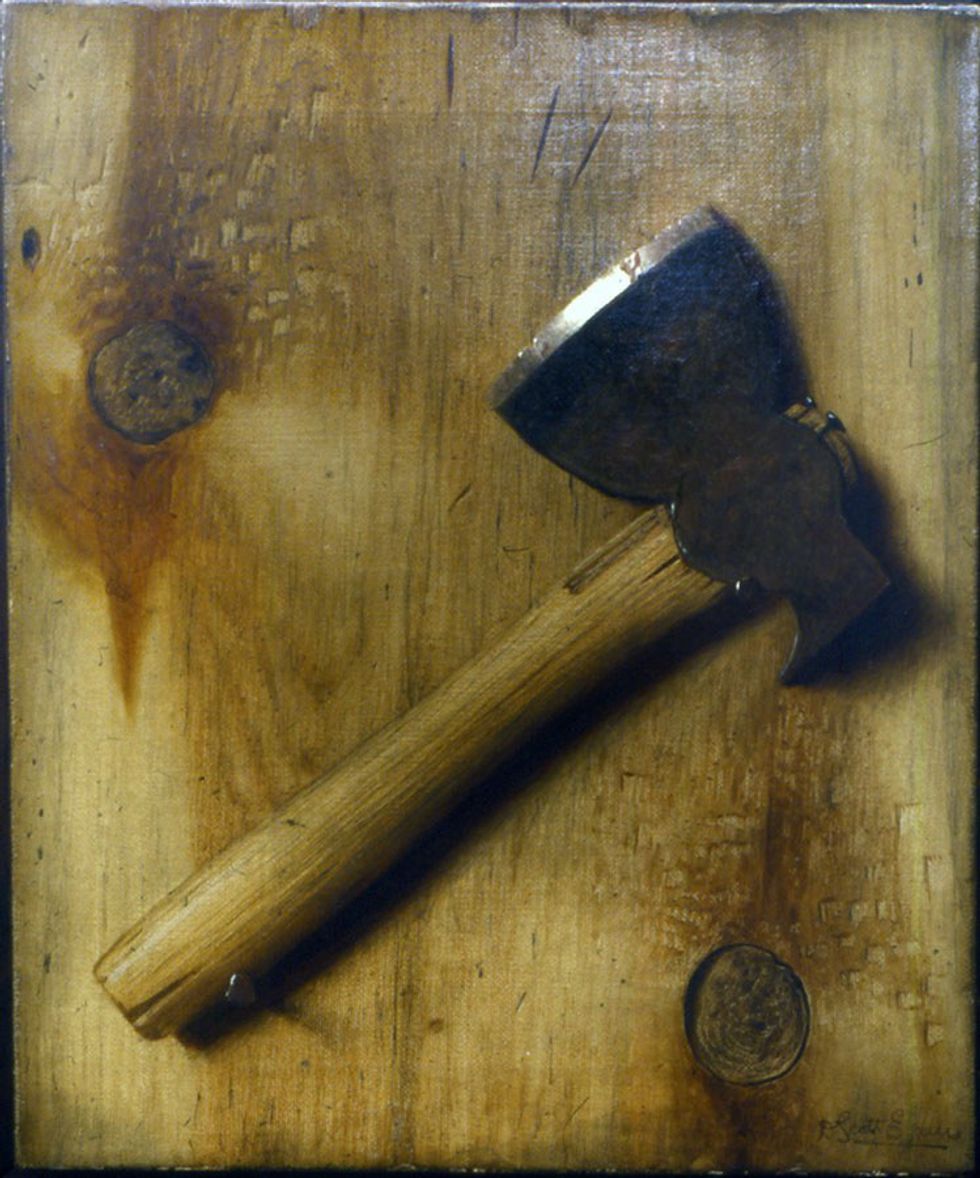 Hatchet ca. 1890. Snite Museum of Art at Notre Dame University.
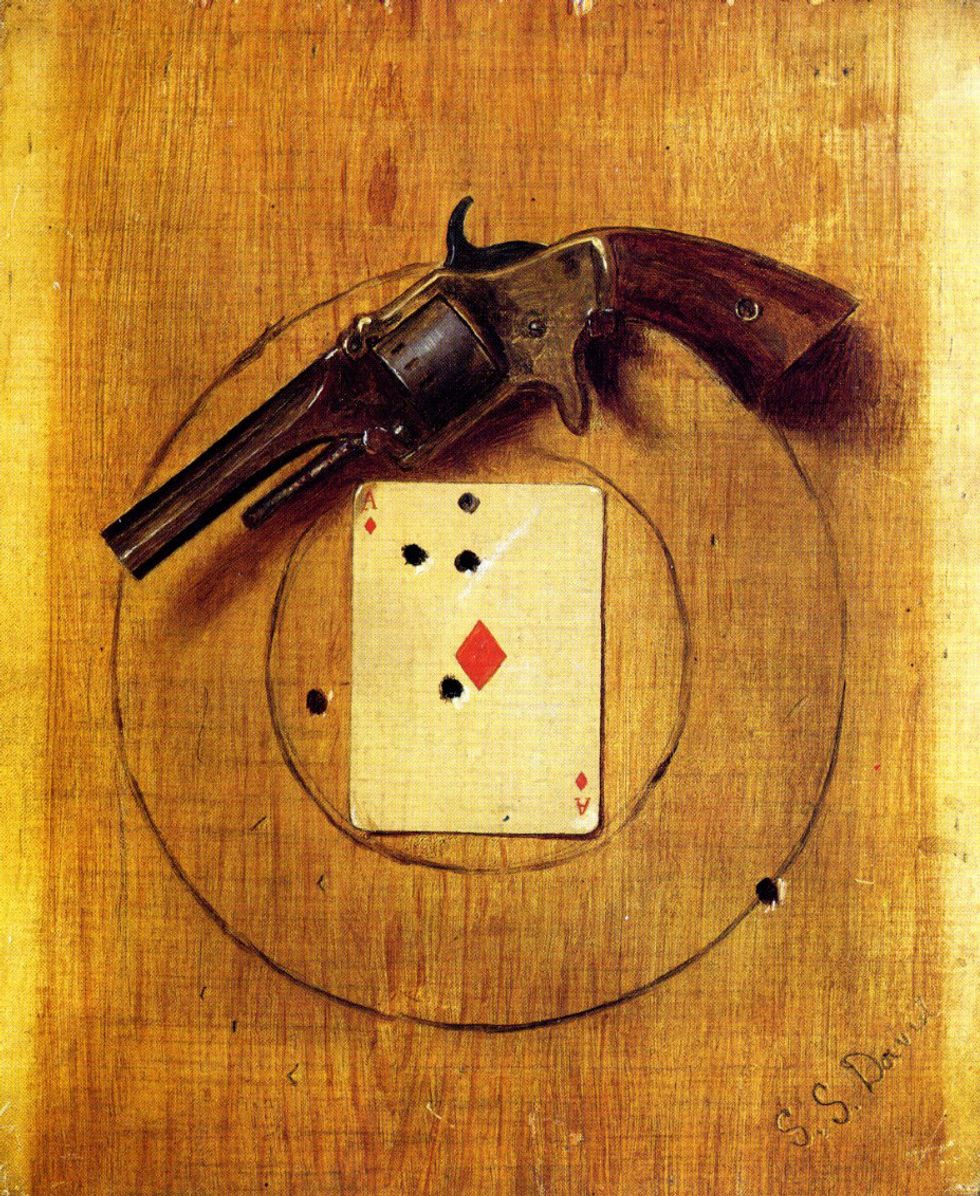 Pistol and Ace ca. 1890. Private collection.
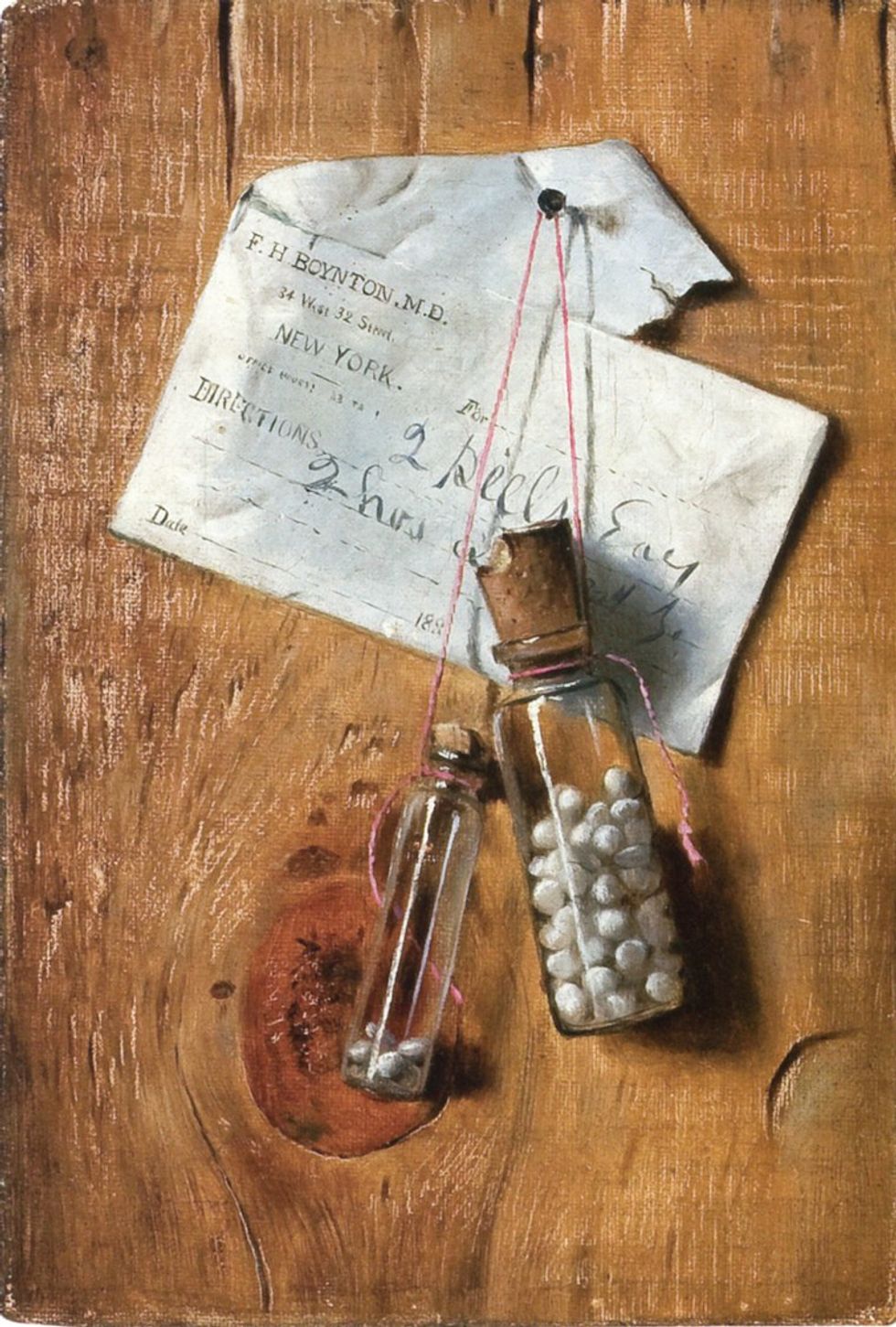 Two Pills a Day ca. 1890. Private collection.
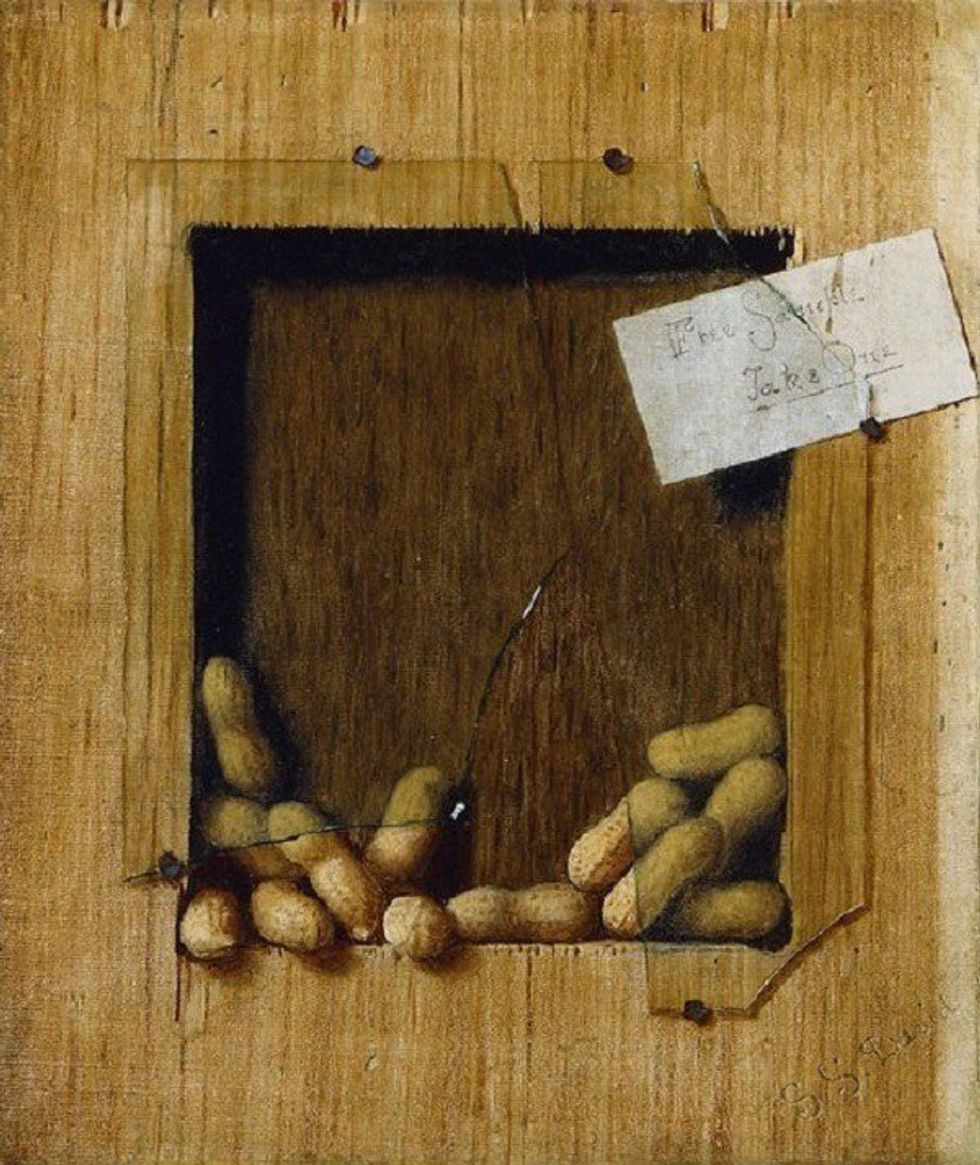
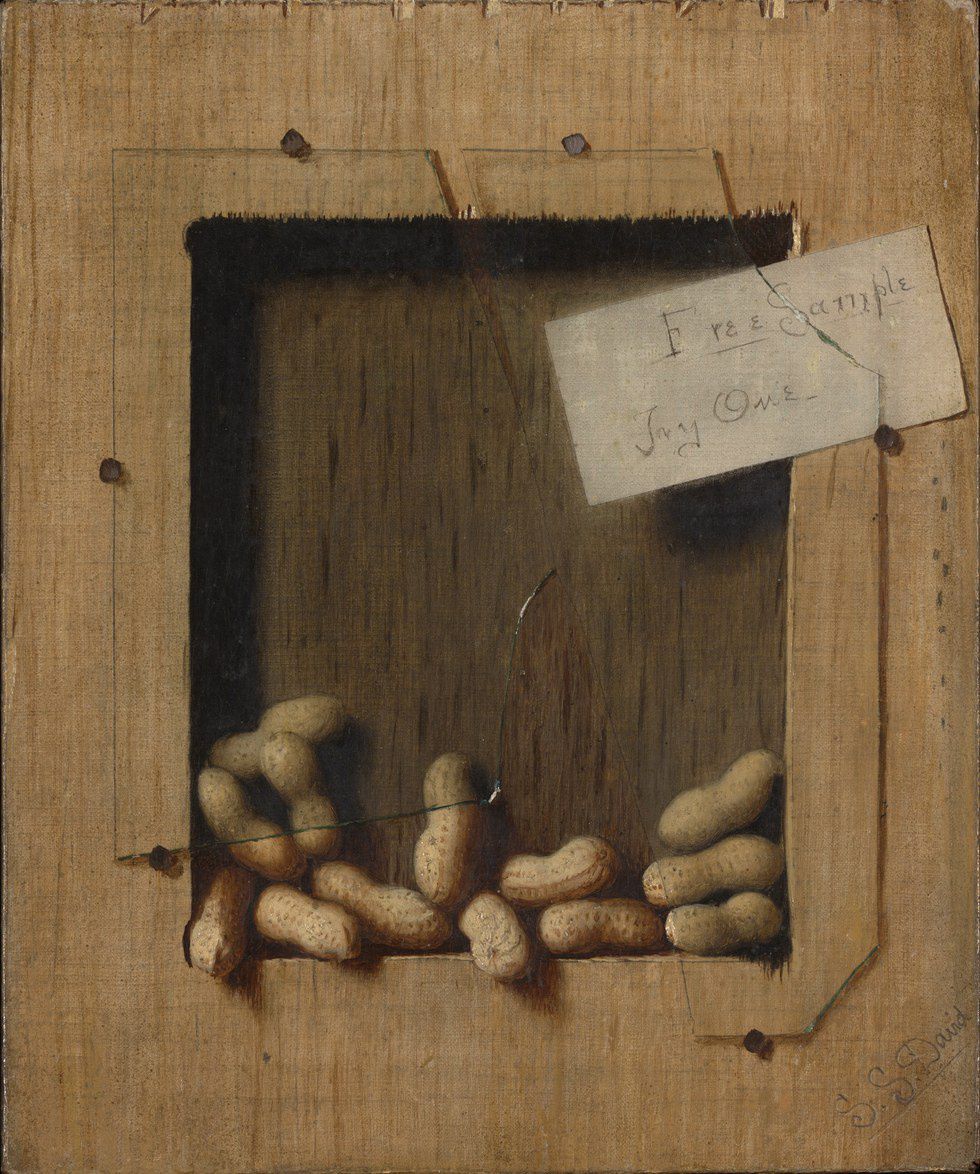 Free Sample, Try One ca. 1890. Yale University Art Gallery.
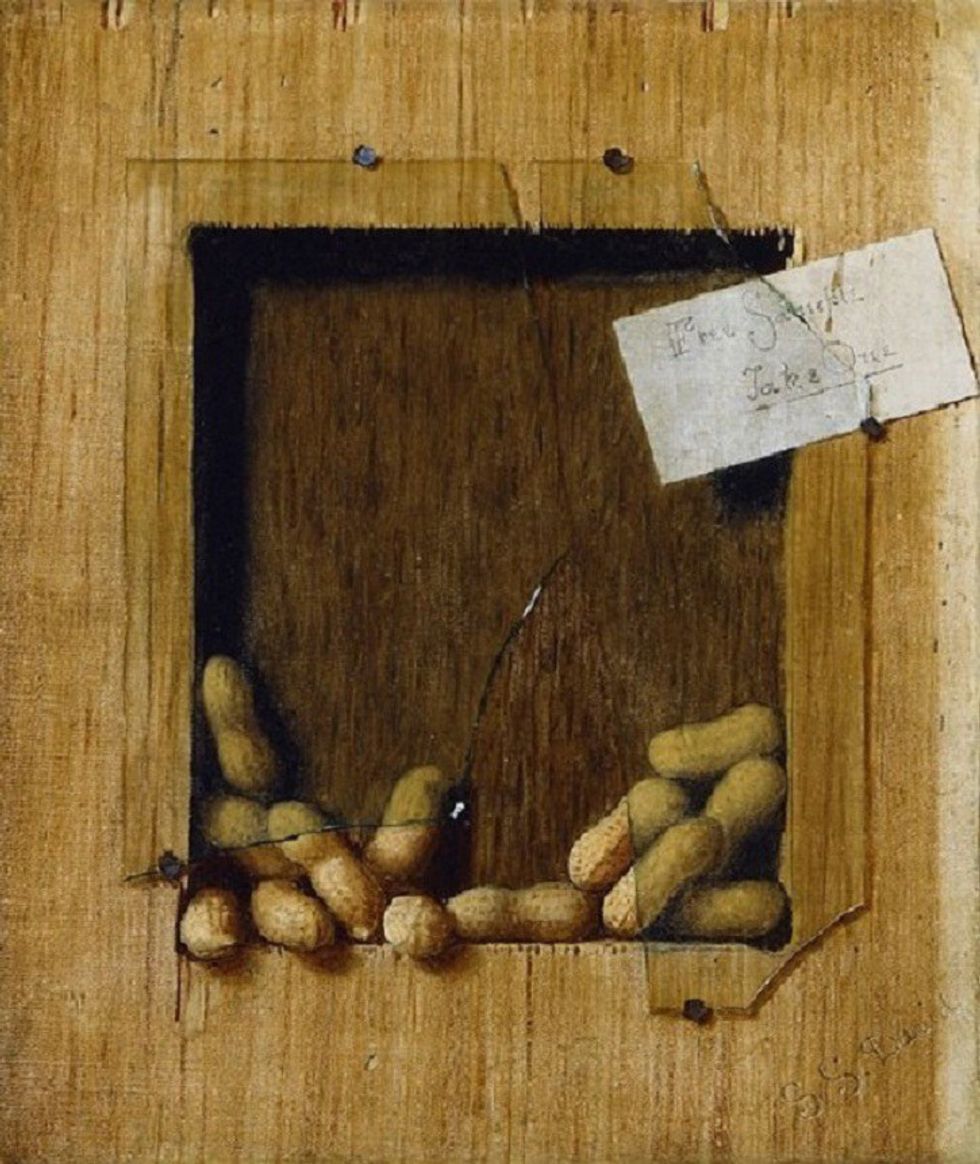 Free Sample, Take One ca. 1890. The Columbus Museum.
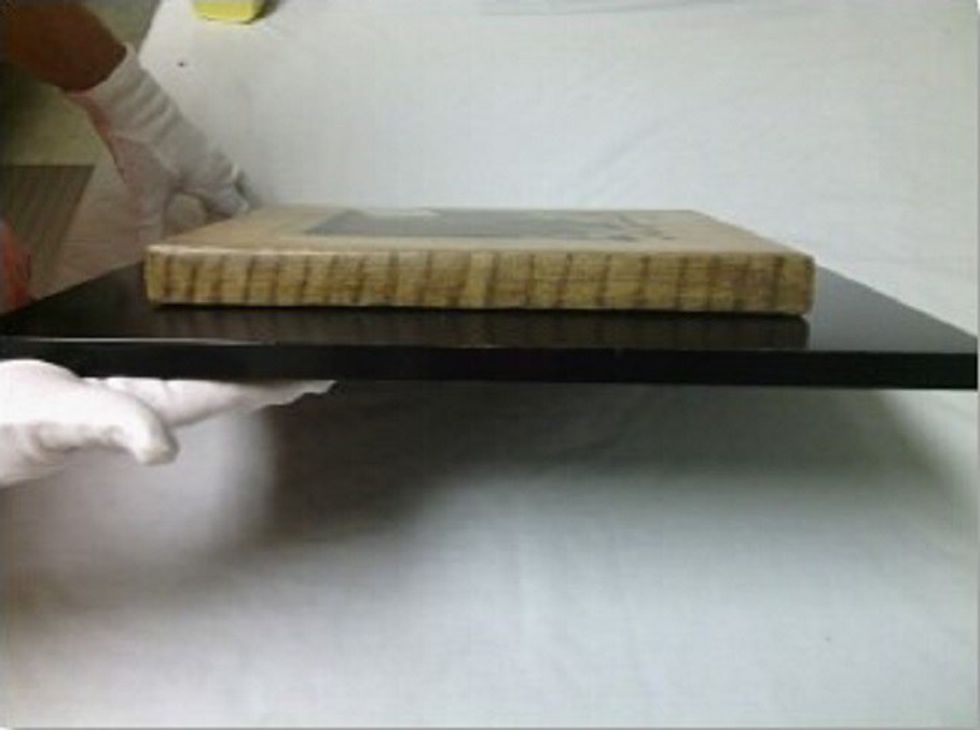 Free Sample, Take One ca. 1890. Viewed from the left hand side. The Columbus Museum.
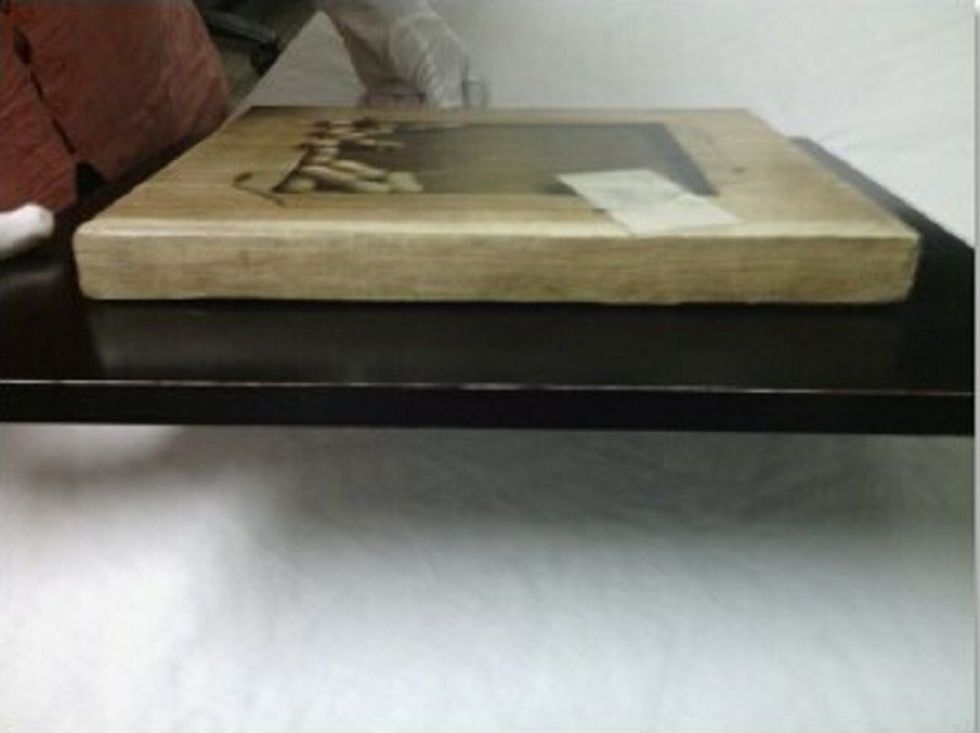 Free Sample, Take One ca. 1890. Viewed from the right hand side. The Columbus Museum.
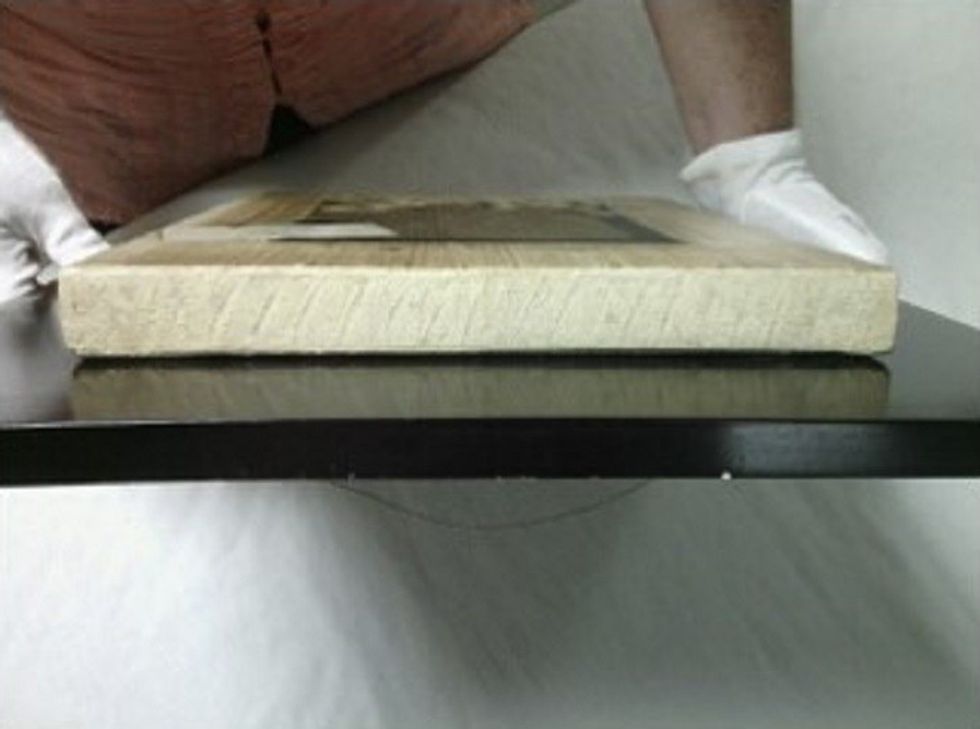 Free Sample, Take One ca. 1890. Viewed from the top end. The Columbus Museum.
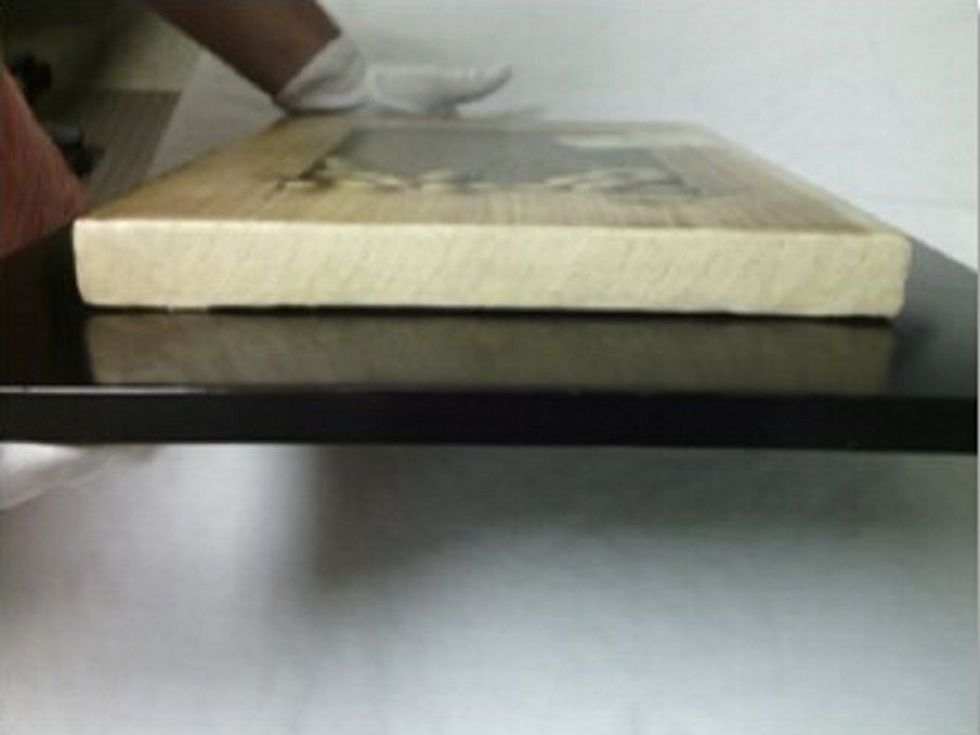 Free Sample, Take One ca. 1890. Viewed from the bottom end. The Columbus Museum.
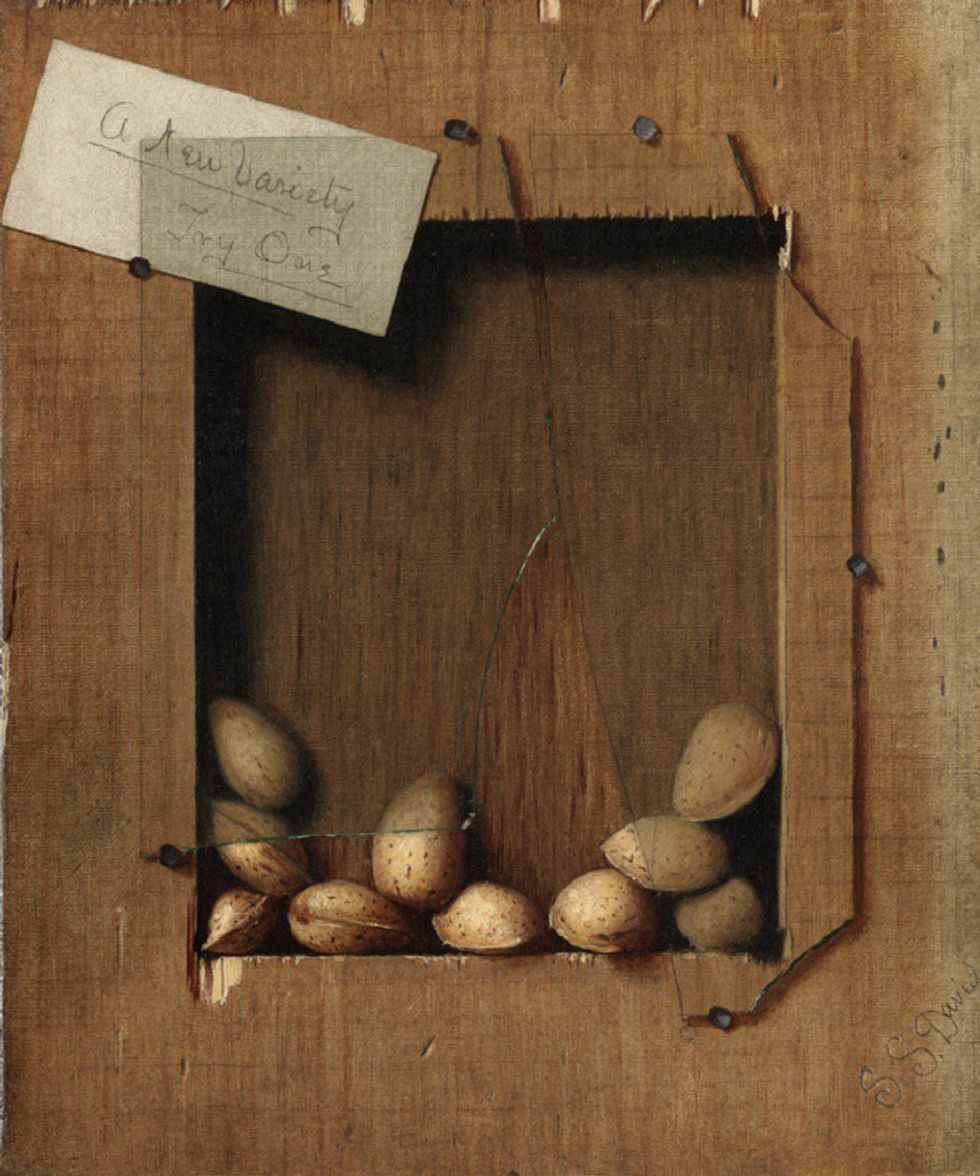 A New Variety, Try One ca. 1890. Pennsylvania Academy of the Fine Arts.