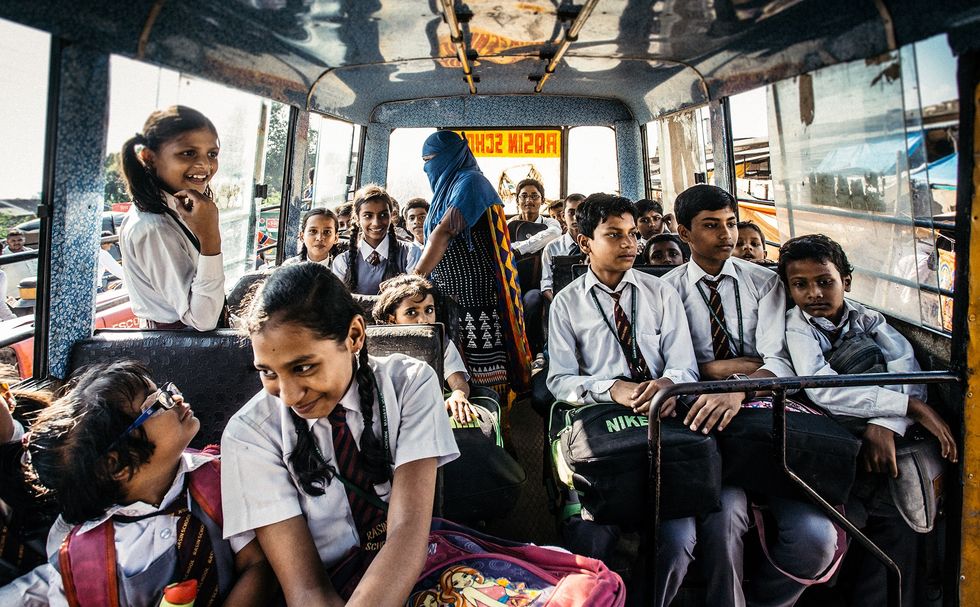
As it stands, more than 130 million girls worldwide are out of school. This includes girls who never began their education at all and girls who stopped going to school at a certain point for any number of reasons.
The number of girls currently enrolled in school is lowest in places like the Middle East and Sub-saharan Africa. In these places, about 17 million girls are never expected to enter school.
Why are these numbers so high?
In war-torn countries and areas of conflict, young girls are often forced to leave school because it’s unsafe. They pack up what little they can take with them and they often leave their home countries and become refugees in nearby countries. Young girls with refugee status have little-to-no access to schooling, and as they get older, the odds of them getting an education decreases.
In many countries, girls are unable to attend school because of gender-based violence. They are intimidated by threats from their neighbors, community members, and even governments. In many countries throughout the Middle East, girls in school often endure physical, verbal, and sexual abuse.
Girls' lack of education around the world can also be attributed to the cost of schooling and the proximity to the nearest school. In some areas, the nearest school is over 50 miles away and many children can’t afford to make that trip daily.
In many countries, education is a far-off dream for young women. They’re expected to work instead of going to school, or they’re married off at ages as young as 11 and 12 to men triple their age, and any chance of entering school is whisked away.
So what would the world look like if ALL young women were able to attend school?
If all women received the education they deserve, economies would strengthen and the number of available jobs would increase. If every girl got 12 years worth of education, lower income countries could add almost $100 billion dollars to their economies per year. When young women are educated, their access to formal jobs increases and they can start to break cycles of poverty.
Women would be healthier, and thereby raise healthy families. Uneducated women are more likely to marry young and have an increased chance of contracting HIV. Each additional year of school a girl completes decreases infant mortality and child marriage rates.
Education breeds knowledge and resilience, which can help conflicts be resolved quicker or prevented altogether. The education of girls worldwide would ultimately lead to more stable and peaceful societies.
When we sit idly by and watch as millions of girls are denied access to basic education, we are watching future generations of lawyers, doctors, teachers, and artists slip away.
These girls have the potential to be world changers and peacemakers if they only had the tools they need to attain an education. Our world would be healthier, stronger, and safer if everyone had an equal access to school.
Education should not be a privilege. It should not be a luxury reserved for those lucky enough to be born in certain countries, or those who have more money than others. Education should be a basic right, an opportunity given to everyone, no matter their gender, race, class, or religion.
For more information about girls' education, you can visit https://www.malala.org/girls-education






 man running in forestPhoto by