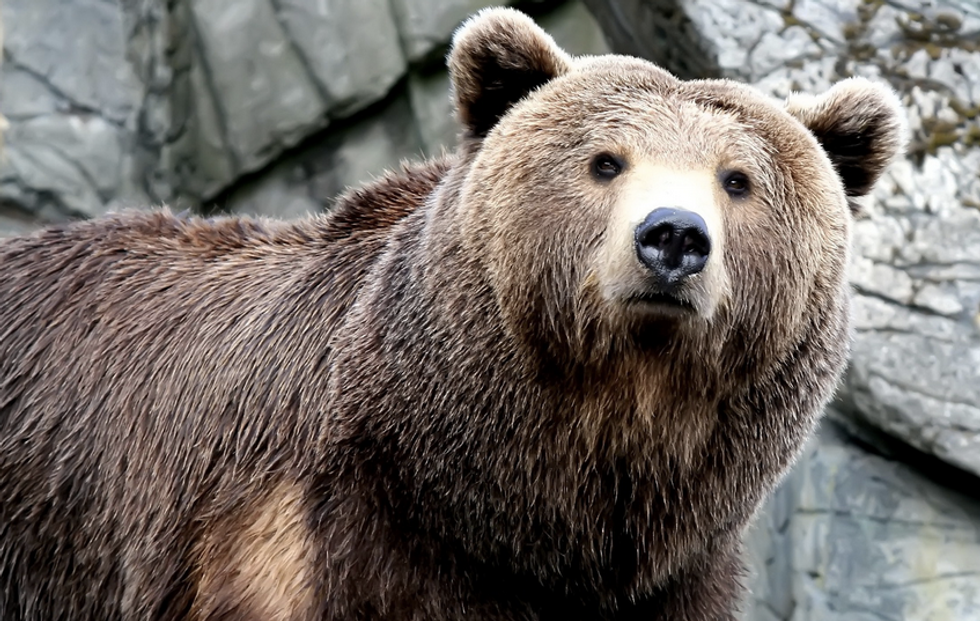
Glacier National Park, the ultimate tourist destination, is also (as much as we may forget it) home to the grizzly. Both sought out and often actively avoided, these magnificent beasts are an integral part of the wilderness we crave, yet all too often, we as tourists do a great job of forgetting this entirely.
I’ve spent a good chunk of every summer in Glacier since the year I was born. I grew up to the anthems of bear encounter etiquette: Don’t make eye contact. Back away slowly. Don’t find yourself in between a momma bear and her cub. Roll up in a ball and cover your neck if the bear attacks. Make loud noises (especially yelling out “Hey, bruin” sporadically) warning it of your presence. Be especially cautious in bear country (huckleberry patches, lakes with lots of trout, filthy campsites).
This etiquette was preached extensively, and we absorbed it all with the understanding that the bear was to be respected. Alongside the yearly story of the tourist who needed to capture that picture-perfect moment but instead fell to a tragic death, there was the less common but incredibly thought invoking story of the man-eating-bear, or rather, the person who found their way to death through, more often than not, foolishness and a lack of respect for this bear and its home.
I grew, then, with the understanding that these wild lands were to be moved through gently. The woods were not our protector, but one of the few still-standing homes to these great animals. Despite this knowledge and this protocol being ingrained in my head from age one, the first up-close, on foot, potentially dangerous bear encounter I experienced was dealt with terribly wrong.
The sun was going down, and my two brothers, my dad, and I were only barely trudging along after a night of camping and fishing at Trout Lake. Our dad hiked on ahead as the three of us lusted after and indulged in huckleberries, gathering bagfuls in anticipation of a feast of huckleberry pancakes. I found myself in a trance like state due to the combined effect of exhaustion and complete consumption by the sweet sticky berries. Lucky for us, my older brother was alert enough to hear my dad yell out, “Bear!” and told us to get off of the trail. Within seconds, we were covered in ash from all of the fallen trees, about fifteen feet off of the trail, and crouching with our bear spray at hand. Up until we saw the bear, we were completely ignorant as to what the situation was.
We realized that our dad had done quite precisely what it is that you are never supposed to do in the case of a bear encounter: run. My dad rounded a corner on the trail, and fifteen to twenty feet before him stood a hefty mamma grizzly bear, moving up the trail towards him. In a state of shock and fear, he spun around and bolted up and off the trail, then yelling for us to also move off the trail. I had no knowledge of the grizzly bears state, and I had whispered my good-byes to myself and prepared for what I imagined might be a gruesome death at the hands of a rightfully angered creature.
Luckily, my overly morbid imagination was proved wrong, and I lived to see another day. The bear held zero interest in our existence and simply meandered on past us enjoying the trail and the berries as much as the average tourist. We found ourselves relieved, soaking up the silliness of the situation, and awestruck.
We were very lucky. We were also very prepared for the situation. However, I’ve exited this encounter with a greater understanding of just how large a risk we take we wilderness exploration. No individual animal’s actions can be predicted. In venturing out into the back country, every one of us is signing an unspoken waiver: we are signing away our rights to life at the hands of nature, the still untamed and wild creatures, the ones whose land we love.