


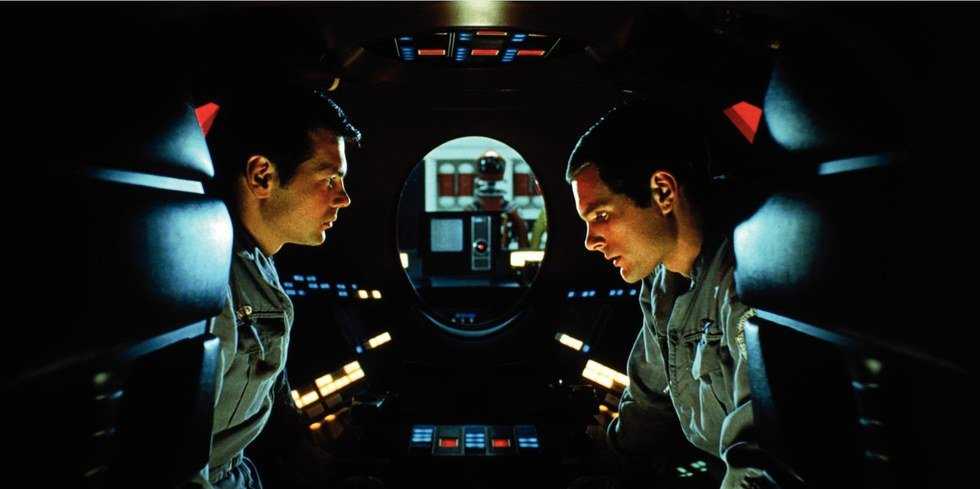
When we think of science fiction, we tend to think of farfetched futuristic scenarios- killer robots, lab-grown monsters, and aliens bent on our planet's destruction. However, as our technology continues to improve, we are constantly moving closer to the futuristic worlds portrayed in sci-fi films. These three classics are starting to become science fact... with just a little artistic license.
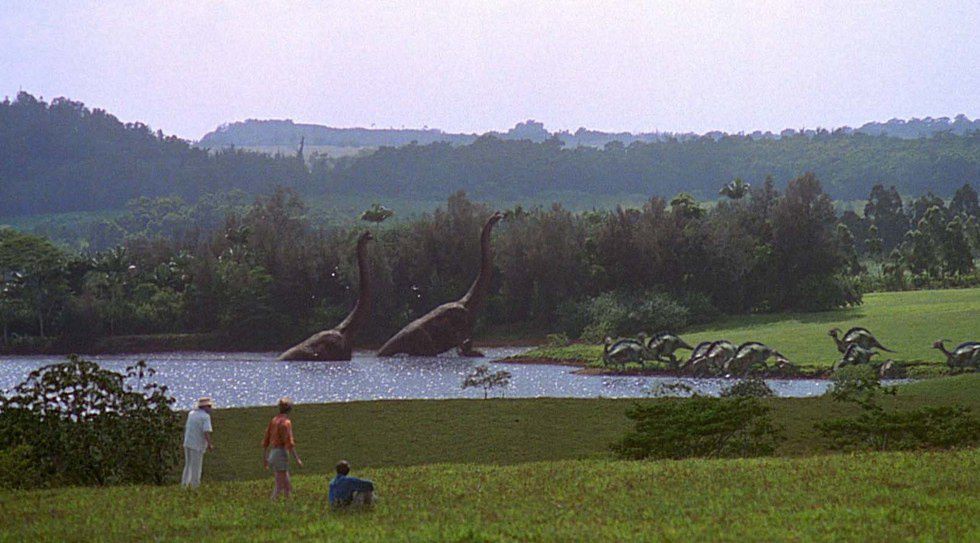 Jurassic Park and the restoration of extinct species
Cloning extinct animals requires a surrogate mother, and for an animal to successfully give birth to offspring of a different species, the two species need to be as closely related as possible.
Additionally, the kind of environments where dinosaurs usually lived were not ideal for preserving soft tissue, so genetic material is hard to come by. Extinct animals that lived in areas where there bodies could be preserved, like woolly mammoths, or animals that went extinct more recently, like thylacines, are much more likely to be successfully cloned.
Many scientists see the possibility of “de-extinction” as a way to try and fix our past mistakes by bringing back species that humans caused to go extinct. Others argue that bringing back once extinct species could be detrimental to the environment by reintroducing competition or predators of existing species. As it stands, there is still quite a bit of debate on whether de-extinction is a step toward a bright future or if scientists have been “so preoccupied with whether or not they could, they didn’t stop to think if they should.”
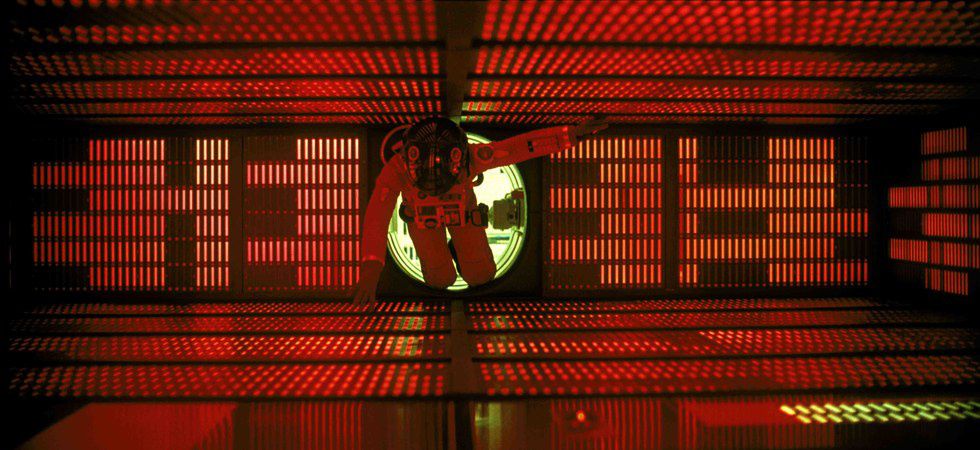 2001: A Space Odyssey and artificial intelligence
Although this film was made in 1968, years before people could even have computers in their own homes, its portrayal of an artificial intelligence gone rogue is well within the realm of possibility today.
In the film, HAL 9000, the mission’s caretaker and security system, murders the crew when he finds out that they have kept information from and plan to deactivate him. Although an AI has never murdered a person before, they do sometimes make mistakes- like when IBM’s computer Watson learned how to swear in 2013, or when Tay.ai, Microsoft’s “teen girl” robot, designed to learn to interact with humans entirely from twitter, became a racist, sexist PR fiasco within 24 hours.
Today’s AIs, and HAL, have been designed to learn to solve problems by observing humans, and what they can learn from us does not stop at “good” behavior. When an AI is led on the wrong track, it does not take very long for the situation to get out of hand- whether that means a little coarse language or a murderous rampage.
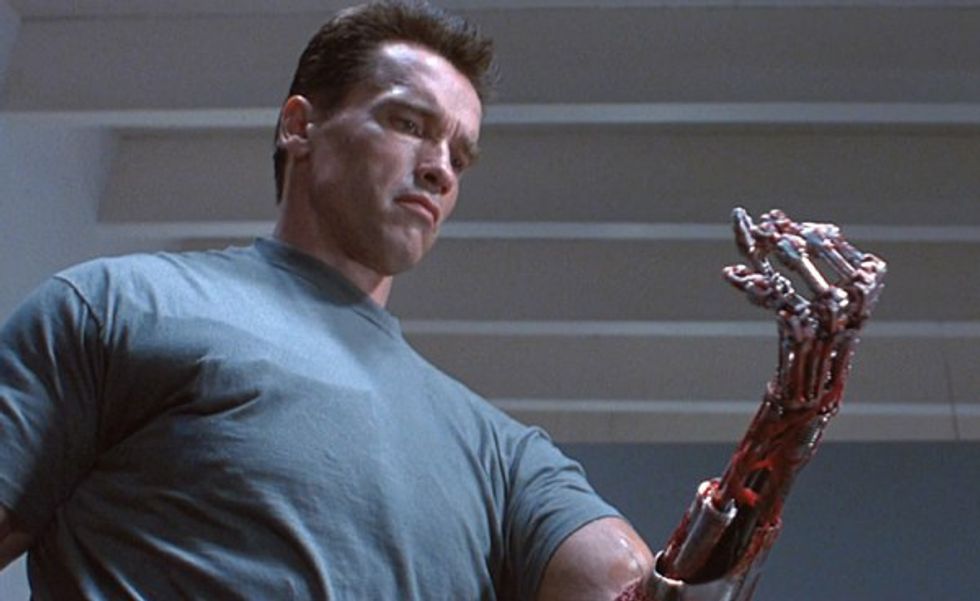 Terminator and humanoid machines
Arnold Schwarzenegger’s character in this franchise is a cyborg assassin from the year 2029- only 13 years away from the present day. So how close are we to real-life cyborgs?
The concept of merging man and machine is definitely a plausible one, and is actually already being applied in places like the John Hopkins University Applied Physics Lab, where an operation has been developed that allows patients to control their prosthetic limbs simply by thinking of an action, just as one would with a real arm or leg. Fortunately, the current real-life applications of Terminator-style technology are only being used for the benefit of human beings.
In addition, the company Boston Dynamics is constantly working to develop better, faster, more realistic robots, including the Cheetah, which can run at 28.3 mph, and RiSE, a small six-legged robot capable of scaling walls and fences with its micro-clawed feet. Boston Dynamics has also developed two humanoid robots- Atlas, a rough-terrain robot that is strong enough to climb using its hands, and PETMAN, designed to test protective gear by moving and bending almost as freely as a human body. Robots disguised as humans may not walk among us in the next 13 years, but in the next century or so, it is not entirely impossible.

















