


For the past few months, Yemen, a country “at the crossroads of Africa, the Middle East and Asia,” has been “at the edge of a civil war."

The Yemen Civil War is between two factions that claim to constitute the Yemeni government. The southern separates are loyal to President Abd Rabbuh Mansur Hadi while the Houthi forces are loyal to former president Ali Abdullah Saleh. In February, President Hadi "escaped from house arrest...by dressing as a woman, wearing a long black chador covering all but his eyes." Security in Yemen is divided. Some units are fighting for Saleh; others, Hadi.
Historically, Yemen is divided by the Shiites and the Sunni. The Shiites live mostly in the northeast; the Suni reside in the southeast. The Houthis, a Shiite insurgent group, fought the cabinet of President Ali Abdullah Saleh starting in 2004 until he stepped down in 2011 because of protests. Four years later in present day, the Houthis are working with security forces loyal to Saleh. This shows how alliances are shifting in Yemen.
Although this war has been covered by western news organizations, the specific details of the crisis are largely ignored. This conflict exacerbates regional tensions, creating stress for the West with threats of attacks on power.
This war results in large part from the power struggle between Iran, a Shia-dominated country, and Saudi Arabia, whose ruling family and most citizens are Sunni. Saudi Arabia shares a long border with almost the entire length of Yemen. Iran’s sea shore is less than a hundred miles from Yemen, so events in Yemen affect both nations. Iran is thought to be responsible for much of the uproar in Yemen.
Globally, Yemen is also important because its western shore is located at the Bab al-Mandab strait, the waterway that links the Red Sea with the Gulf of Aden. Shipping to and from the Suez Canal passes through this pinch point. Thus, chaos in Yemen threatens energy security and other commerce around the world.
Recently, a Yemeni photographer released a video of Fareed Shawky, a dying 6-year-old boy who begged for his life after a shrapnel struck him in the head during a missile attack from the Houthi rebels. The attack hit the residential area of Taiz. In the video, recorded a few days before his death, Shawky pleads “Don’t bury me” as tears fall from his intense brown eyes.

Shawky is just one of many civilian casualties caused by this war. According to the article “A dying boy’s plea that became an iconic message for peace,” at least 2,300 civilians have died during the Yemen Civil War including at least 500 children.
This BBC Trending report tells an unfamiliar story for readers. Everyone is concerned with the soldiers coming home safe from war, and although that is important, it is also important to remember the wars are fought near villages and neighborhoods. It’s not just soldiers who die; multiple civilians die every day.
From 2003 to 2015, at least 200,000 Afghan, Iraqi, and Pakistani civilians have died because of war, an average of 48 civilians each day.
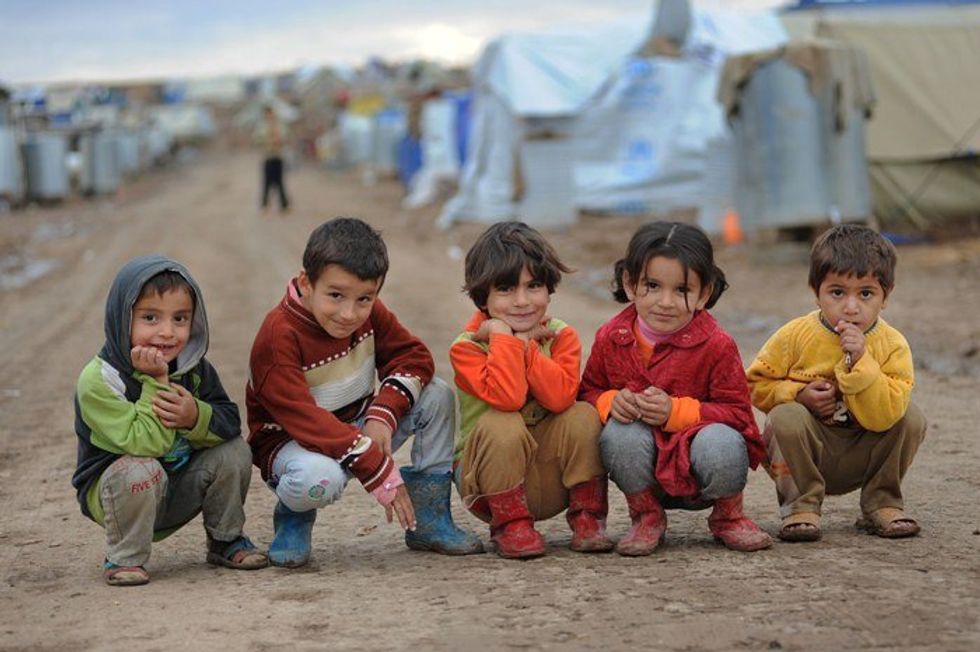
During the five years of Syria’s civil war through 2013, more than 100,000 civilians have been killed, including 11,420 children. UNICEF, the United Nations International Children’s Emergency Fund, reported more than a million Syrian children refugees during the same period.
In March 2014, as the three year anniversary of the Syrian war approached, the organization Save the Children released a commercial called “Most Shocking Second a Day Video.” The fictional video shows a s in the life of a British girl in London who has to leave her home, dodge bombs on streets and enter a refugee camp. The commercial ends with the sentence “Just because it isn’t happening here doesn’t mean it isn’t happening.” The commercial tried to get people to understand the human cost of war and what it does to children, particularly in Syria. As of Oct. 23, 2015, the video has 49.9 million views on YouTube.
Before Civil war began in Syria roughly five years ago when the Syrian average life expectancy was 76 years. Now, that average is 55 years. War has taken over the country so much within the past half decade that an average of 20 years have been cut from people's’ lives. Imagine how many of your relatives and friends would have to die in order to make that happen in this country!
Each civilian who dies belongs to a family. Each of those families grieve the loss of that civilian, of that child, brother, or sister. Look at the death of Shawky and the "Most Shocking Second a Day" video. People live this life. We sit at our computers or look on our phones reading reports on violent conflicts around the world, but do we stop and think about the neighborhoods, the families, and the communities destroyed through these conflicts? Something needs to change and quickly. When children's lives are at risk, so is the future of the world.

















