
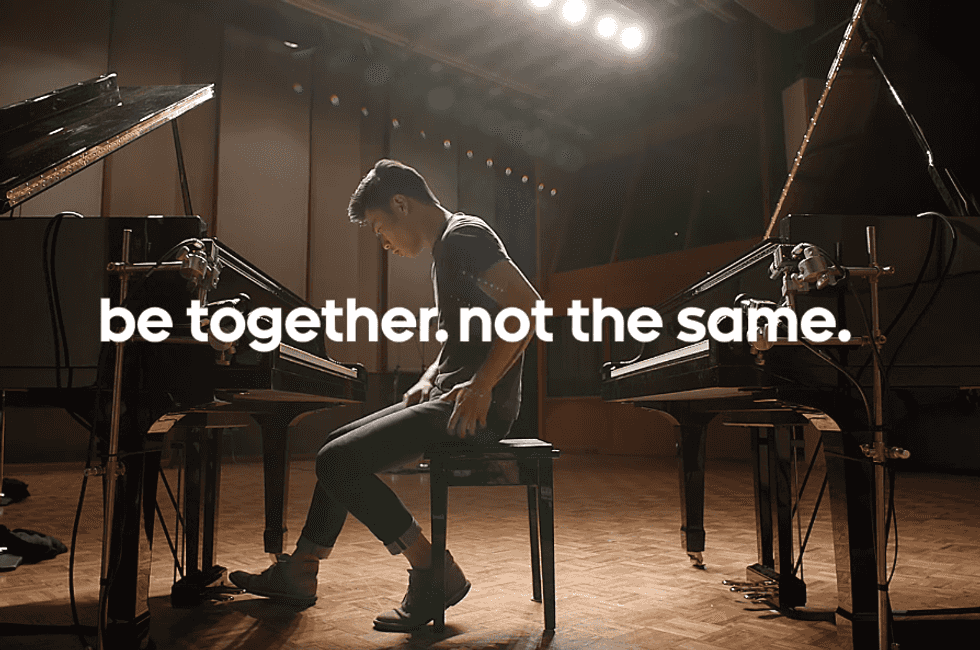
Have you seen that piano commercial that's been airing a lot lately? You know, the one with the two nearly identical pianos and the guy tickling the ivories in an awe-inspiring way?

This guy. This commercial.
What's the difference between the two pianos? Well, after watching the commercial, it's quite obvious: One plays different notes, and one plays just the same note.
So what's the point...?
These pianos actually provide a metaphor for something much bigger; they provide a metaphor for human society.
Say what?!
Think about it: What do you think about when you think about diversity? Perhaps different ethnicities, backgrounds (family, socio-economic, relationships), sexualities, religions. In sum, we think about people who are different than us.
So why, especially in politics, do laws and rules-- hell, even social standards and stereotypes—treat what they know to be a diverse group of people as the same people with the same problems, the same experiences, the same history?
There are certain rights that we all have as human beings; many would argue these rights can be found in the U.S. Constitution—life, liberty, and the pursuit of happiness.
While we may have some basic liberties that we all deserve access and privilege to, there are some problems that are unique to a single community we belong to that, say, wouldn't fit into another community or identity we prescribe to or identify with.
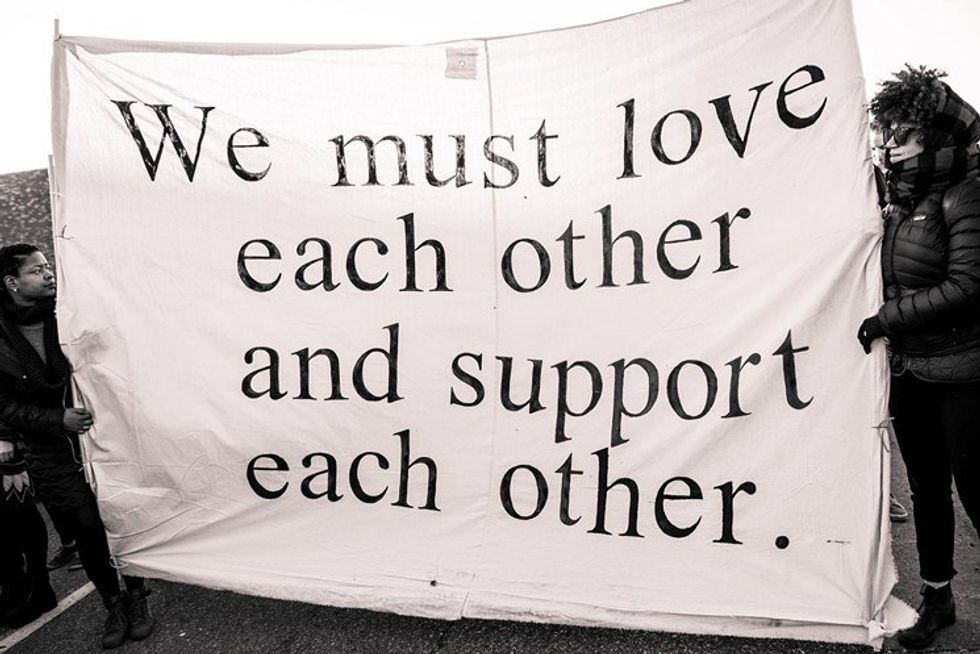
It can be difficult for some groups to see the necessity of activism that other groups feel is their last resort to combat the injustices thrust upon them. #BlackLivesMatter, for example, does not deny the idea that all lives matter. Rather, Black Lives Matter brings attention solely and specifically to their marginalized group that consists of people of color. These individuals face unique challenges and injustices that, arguably, individuals in the caucasian community do not.
The bottom line? We must love and support each other. We are all in this together. And it is our duty as a human being to work tirelessly for the common good so that the human experience is one of joy and renewal rather than death and hatred.