


Recently, Mississipi and North Carolina have passed laws that will allow discrimination against LGBT+ folk. Although these bills have gotten an enormous amount of attention in the last few weeks, there have been at least 200 bills proposed in the United States so far in 2016 that could lead to LGBT+ discrimination. There has been a lot of confusion lately about what these bills say and how they'll effect people, but this is nothing new.
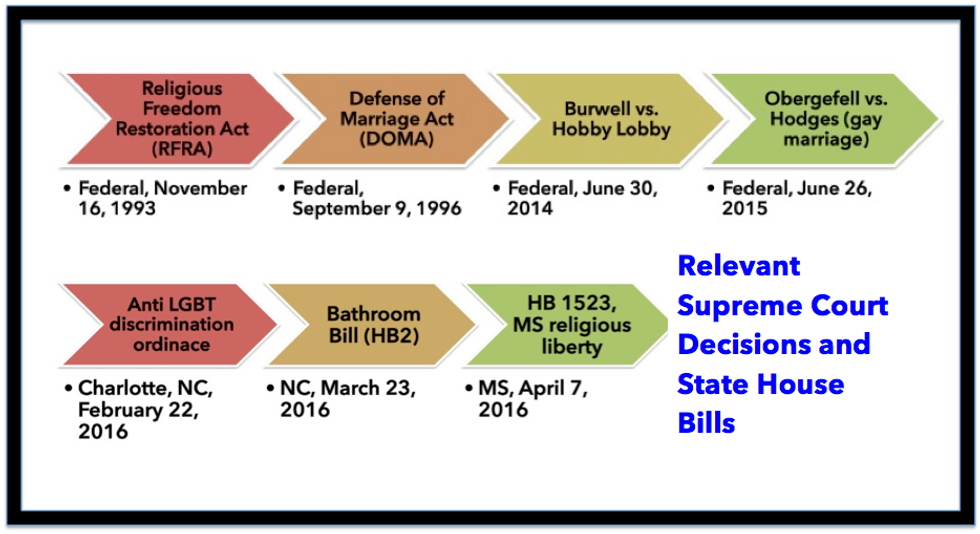
The Religious Freedom Restoration Act (RFRA) and Defense of Marriage Act (DOMA) are older legislation that have fueled recent events. Burwell vs. Hobby Lobby used RFRA in 2014 to win its case while Obergefell vs. Hodges overturned DOMA in 2015. The dramatic increase in "religious freedom" bills may have a correlation with the fact that we are going into an already turbulent election year with those two decisions fresh in our minds.
The far right commonly professes that they are attempting to uphold the integrity of religious freedom and what our Founding Fathers wanted for us. They have obviously not read anything that the Founding Fathers actually wrote about religious freedom because there is no question that Jefferson was not in favor religious persecution. Thomas Jefferon's writing on the topic of religion shines a light on the problems that arise from allowing religion to dictate law.
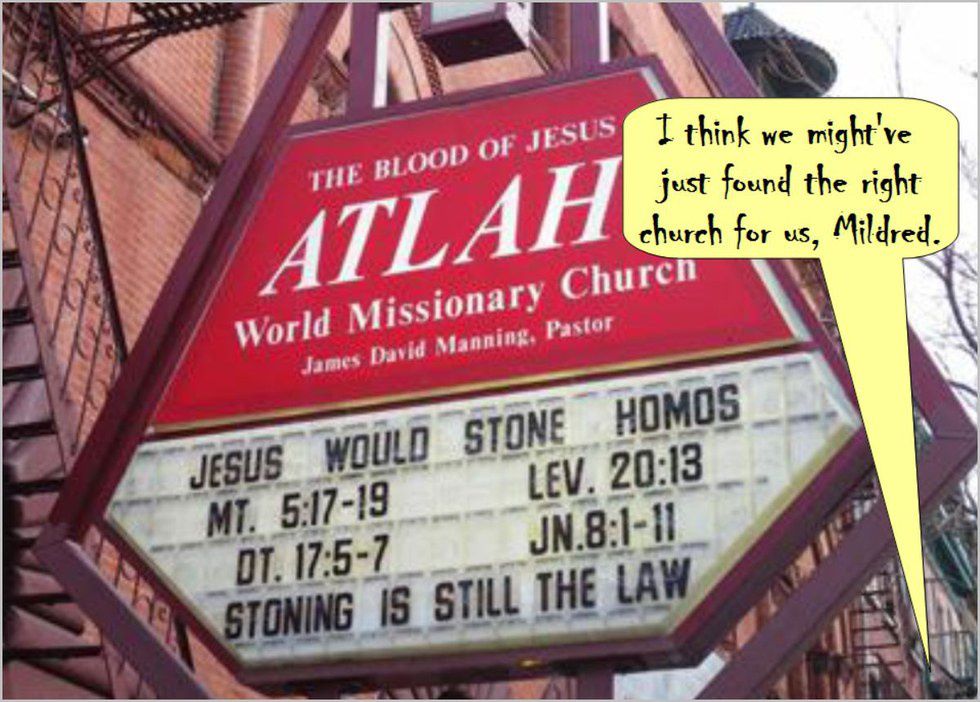
If we are to respect what this particular Founding Father wanted for us, we should not use the law to force our beliefs upon one another or to exempt ourselves from said laws. The law is there to protect religious freedom, not to force religious beliefs upon individuals. Is forcing religion on people this way with laws and discrimination something Jesus would be ok with?— I think not.
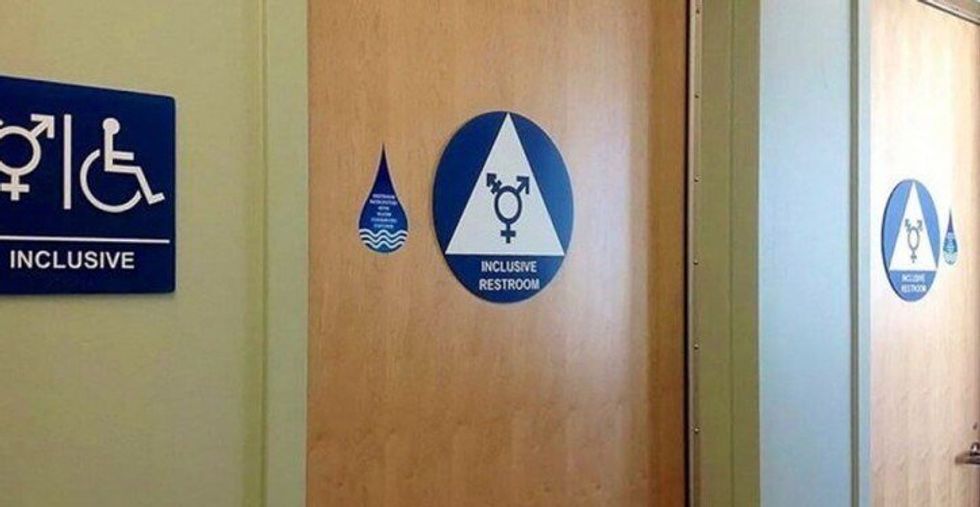
Ironically, just before the notorious "bathroom bill" was passed, Charlotte, NC passed an ordinance extending anti-discrimination laws to include the protection of LGBT individuals in "public accomodations." That ordinance would have allowed people to use the bathroom of the gender they identify as. It was passed on February 22 and was to be implemented on April 1.
However, in response, on March 23 the North Carolina's General Assembly held a special session where they proposed and passed what has been dubbed "the bathroom bill." It was signed into law that very night. House Bill 2 (HB2) serves to repeal any local ordinances such as they one in Charlotte, so not only does it take away the rights of LGBT individuals who just want to use the bathroom, it also limits local governments in several ways.
The bill in Mississippi, HB 1523, is called the “Protecting Freedom of Conscience from Government Discrimination Act.” It was passed on April 7, 2016. This religious freedom bill has gotten media attention as an anti-LGBT bill, but it's much, much more radical than that. It allows for people to be exempt from a great number of things if those things happen to violate their "sincerely held beliefs."
Repercussions of a law such as this include taking away the state's right to intervene in a situation where a foster parent is abusing a child due to "sincerely held religious beliefs." It also protects official hate groups such as the American Family Association (APA) from losing their tax exempt status. Using "sincerely held beliefs" to get around the law is dangerous for everyone, not just queer folk.
It has been suggested by experts that the 2014 verdict of Burwell vs. Hobby Lobby is directly responsible for the rising popularity of “religious refusals.” The decision gave Hobby Lobby the right to deny employees contraceptive-coverage despite the fact that it is a requirement of the Affordable Care Act. The legal mechanism that was used in the Hobby Lobby case included use of The Religious Freedom Restoration Act of 1993 (RFRA) to give religious-freedom-rights to for-profit businesses in order for them to demand religious exemptions from laws they disagree with.
This set a dangerous precedent that makes it more difficult to enforce laws that conflict with people’s religious beliefs. Many have used it as a legal excuse to discriminate. In states with anti-discrimination laws business owners have attempted to discriminate against LGBT individuals which has gone so far as to result in lawsuits, which the business owners lost.
While the Supreme Court was the in process of making the marriage equality decision, Obergefell vs. Hodges, which was passed on June 26th, 2015, public officials and business owners nationwide had been refusing service to LGBT individuals and claimed that they would continue to do so even if the Court’s decision made same-sex marriage legal. Sadly, in February, 2014 The Kansas House of Representatives voted in favor of a bill that would have made that perfectly legal despite the Supreme Court decision.
The far right has compared legalization of same-sex marriage to “another Roe vs. Wade, in this case a Roe vs. Wade for marriage” and decided that they intended to engage in “civil disobedience” if the Supreme Court were to legalize same-sex marriage. Civil disobedience is meant to ensure that minorities have the same access to public services that the majority does, it is not meant to be used to deny access. Appropriately, Americans United has compared this to Jim Crow laws.
In the words of Thomas Jefferson, pulled from Query XVII, “Religion,” which is a part of the Notes on The State of Virginia :
" But our rulers can have authority over such natural rights only as we have submitted to them. The rights of conscience we never submitted, we could not submit. We are answerable for them to our God.
The legitimate powers of government extend to such acts only as are injurious to others. But it does me no injury for my neighbour to say there are twenty gods, or no god. It neither picks my pocket nor breaks my leg. …
Difference of opinion is advantageous in religion. The several sects perform the office of a Censor morum over each other. Is uniformity attainable? Millions of innocent men, women, and children, since the introduction of Christianity, have been burnt, tortured, fined, imprisoned; yet we have not advanced one inch towards uniformity.
What has been the effect of coercion? To make one half the world fools, and the other half hypocrites. To support roguery and error all over the earth. Let us reflect that it is inhabited by a thousand millions of people.
That these profess probably a thousand different systems of religion. That ours is but one of that thousand. That if there be but one right, and ours that one, we should wish to see the 999 wandering sects gathered into the fold of truth. But against such a majority we cannot effect this by force.
Reason and persuasion are the only practicable instruments."
Even though Jefferson believed that Christianity was the “true religion,” he understood that it is not the place of government to dictate religious beliefs, as history has proven that it is beneficial to have difference of opinion in religion. He explains all of the legal penalties heresy or denial of Christianity once held and refers to them as “religious slavery.”
Reason and free inquiry in Jefferson’s opinion are vital to the survival and improvement of Christianity. They are the very qualities of the Roman government that allowed Christianity to come about in the first place. During the reformation, free inquiry is what allowed corruption to be removed and if it is restricted, present and future corruptions will be protected and encouraged.
At the end of the day, it would benefit literally everyone to avoid the kind of thinking that led to The Crusades. We are going in that direction with these bills. Marriage is a legal institution that happens in hundreds of religions as well as outside of religion entirely. We therefore cannot base the laws of purely legal marriages on the rules of any religion.
To deny people service, to kick them out of bathrooms, to disrespect and undermine their very humanity, because of religion is absolutely disgusting. We have to learn to coexist. We have to learn to tolerate and support each other despite differing views and conflicting practices. Is that not what Jesus wanted? Is that not what this country was built on?

















