
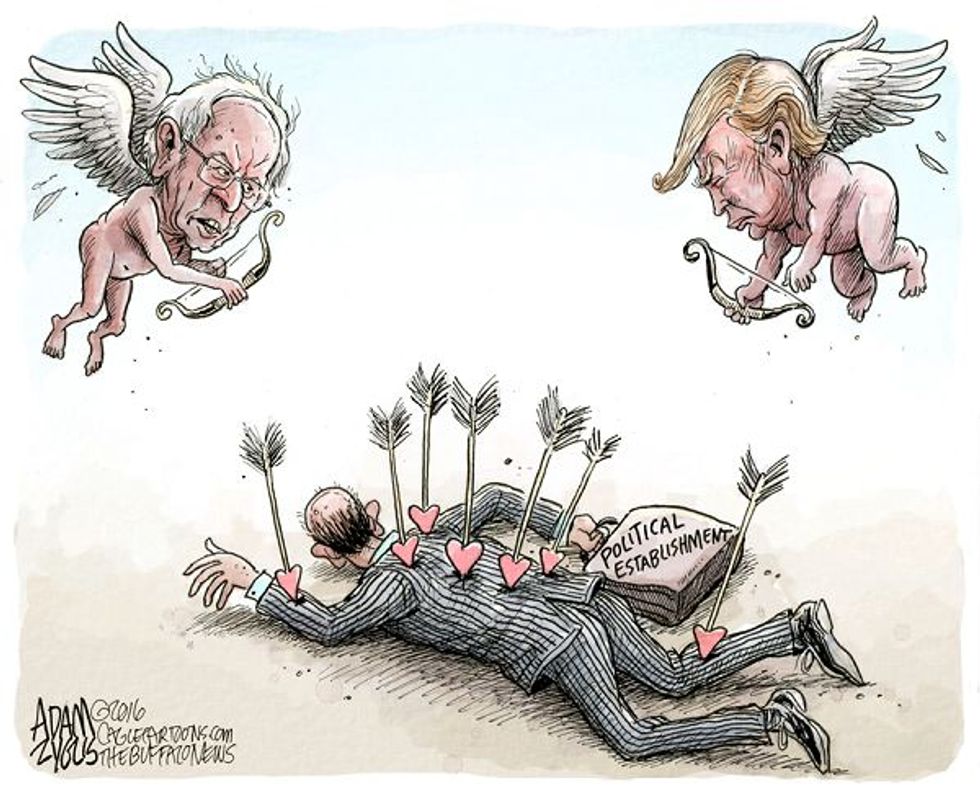
Satire has been implemented in works both in writing and acting for much of known history. Some would say that satire is necessary for telling a good story, whether the story is true or not. Arthur Buchwald, a Pulitzer Prize-winning writer for The Washington Post, said it best: “You can't make up anything anymore. The world itself is a satire. All you're doing is recording it.”
These words ring more true with every day that passes by. If you were to ask a person living in the United States 20 years ago if they would elect a well-known controversial businessman to occupy the Oval Office, they would have most likely laughed or walked away. Today, we have the turmoil of the GOP, the lies and deceit revealed from both parties.
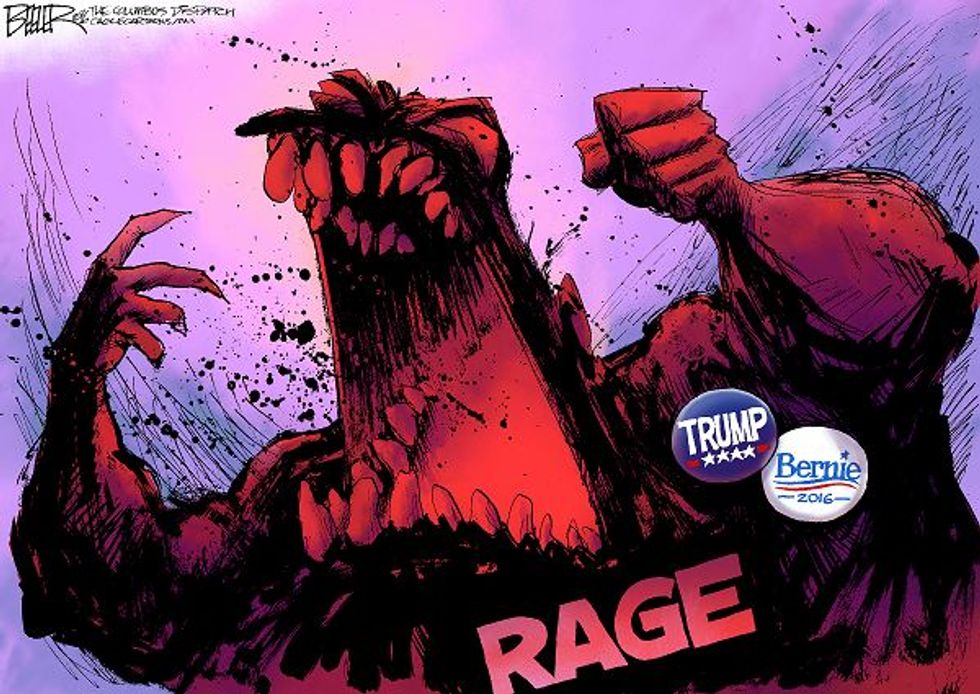
It’s unprecedented in its media coverage. We citizens see it everywhere, even the children: on newspapers; on TV; on our social media; modified into memes that we laugh at, or ones where we gasp, “Did he really say that?” Everyone in the United States can participate and watch the show.
Politics has spiraled out of the hands of the politicians, and into the hands of the people who decades ago would have never heard or seen these debates and events. Editorial political cartoons are being produced at a furious rate, the ammunition of controversy necessary laid bare for the artist to thrive. We have grown sick of that power which has pushed the middle and lower socioeconomic classes downward more than gravity ever could.
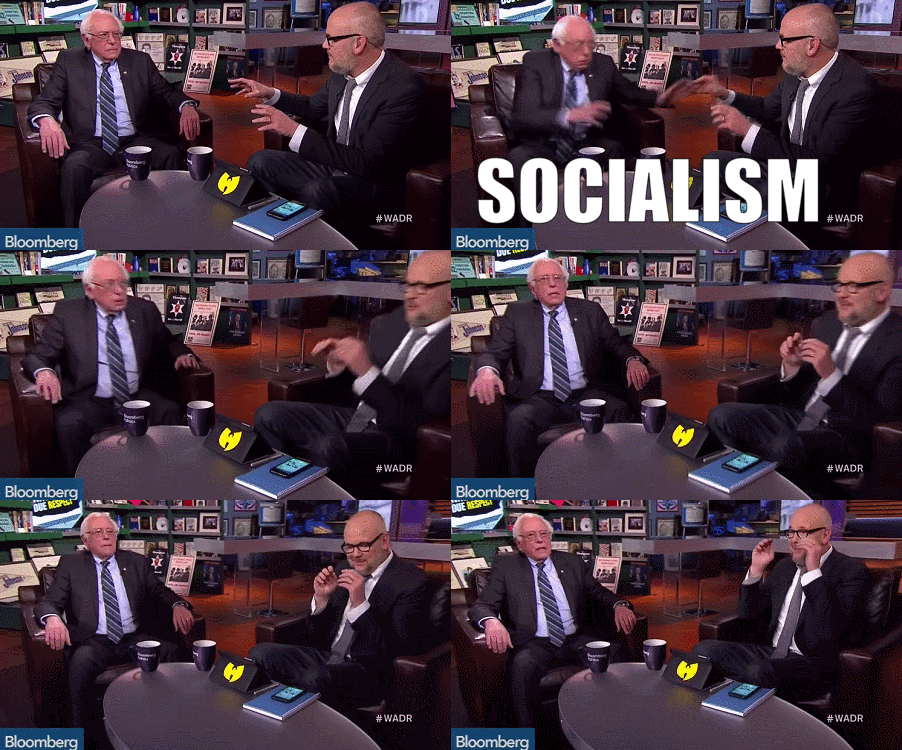
Bernie Sanders's rising campaign force is a perfect example of a grassroots movement completely fueled by sheer will and solidarity. Sanders hasn’t taken a dime from any special interest groups or super PACs, he is a man who represents the people's dreams and well-being. Sanders isn’t a hard man, though; he’s a light hearted old man and many of those who support him see as a grandfatherly figure. Despite his old age, he speaks in every state he’s campaigning in. We see him poking fun at Clinton, chuckling when he’s startled an interviewer; he moves his hands and speaks with a bravado similar to Barack Obama when he ran for office years ago.
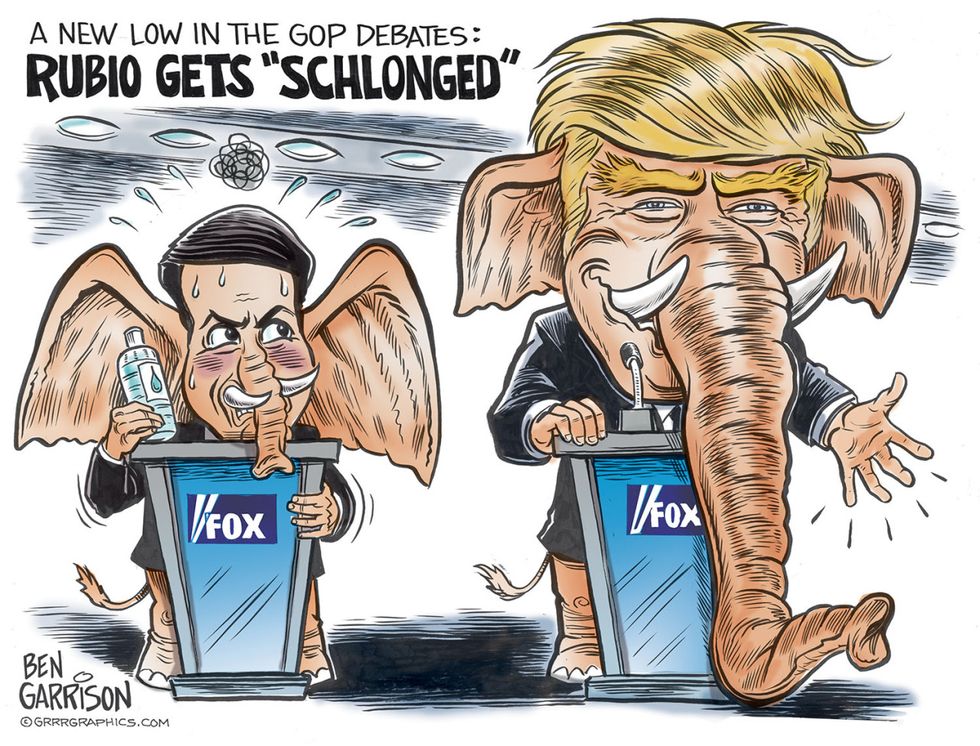
We could look at the circus-like state of the GOP. The debates between the Republican candidates have been little more than mud-slinging and the debasement of the integrity of the political system. There was Marco Rubio -- with his revival on the polls and the stage -- calling out Donald Trump for having small hands and, along with it, another small appendage. There was Trump responding to Rubio and the nation, "There is no issue. I guarantee it." There was Ted Cruz, saying Obamacare "is the biggest job-killer in this country -- millions of Americans have lost their jobs, have been forced into part-time work." And we laugh. We laugh, we point, we sigh, we face palm, we watch it all in high definition.
The opinion of the common person today matters more than it ever has. My neighbors, colleagues, friends, and family, at the push of a button, can let fly their voices in a data stream accessible and open for all to consume.
Satire comes even from the observers. Look at the "Late Night with John Oliver," or "The Colbert Report" with Stephen Colbert, or "The Daily Show" previously hosted by Jon Stewart. These shows were bred from the dissatisfaction of the common person in politics in America. These comedians and they do consider themselves comedians and not journalists, consistently look to joke at the expense of politicians. Moreover, they don’t just make jokes, slap their legs and call it a day; they examine politicians behaviors far more seriously and comprehensively than you would think.
Without men like Stewart, Colbert, and Sanders, we citizens would be up in arms, tired of belittlement, of the inconsistent pandering, and often resulting lies brought to us by our supposed representatives. It brings us a fresh perspective in the form of laughter, and people rarely get tired of laughing. Sometimes, laughter helps us examine the truth in a new light.

















