Film and media is the world where education and entertainment live in harmony together. Mainstream Media and Hollywood hold all of the power to educate and influence the masses. However, the American general public is being miseducated and denied accessibility by the misrepresentation of women and minority groups in Hollywood and Mainstream Media. The majority of the general public receives their information and education through entertainment from film, television, or popular websites such as BuzzFeed, Facebook, and Twitter. By limiting the number of women and minorities from these resources of media and Hollywood, its audiences are being misinformed.
Hollywood and Mainstream Media have a very impactful influence and persuasion over the general public and their opinions, morals and beliefs. The issue is that by producing and publishing pieces about women, feminism and minority groups that are written by someone outside of each respective group, the audience is given a false view of that group. This means that they cannot form a legitimate respect and understanding for these minority groups and women. As a result, these majority audiences now have a skewed and sometimes wrong view of feminism. As the amazing bell hooks stated in her book "Feminism Is for Everybody: Passionate Politics," "everything they know about feminism has come into their lives thirdhand, that they really have not come close enough to the feminism movement to know what really happens, what it’s really about.” What hooks means is that the audience has learned about a culture or group from someone who is not a part of that culture, but has only heard and read about said culture. Not only does this leave people misinformed, but also risks cultural appropriation in most cases.
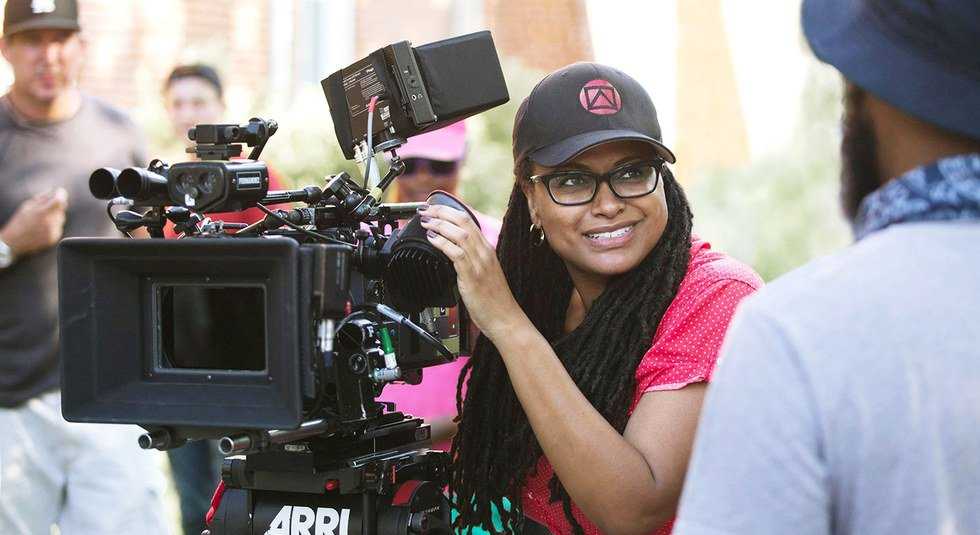
Hollywood is a male dominated industry and has a scarcity of women not only in the field of directors, or auteurs, but across the board of positions. Angelica Huston is quoted in the New York Times as saying, “They don’t want us to be priests. They want us to be obedient nuns.” According to research done by Stacy Smith at the University of Southern California and commissioned by actress Geena Davis, only 30.2 percent of speaking or named roles were given to women in the top grossing films from 2007 through 2014. While that is in front of the camera, this also means that screenwriters are not writing about women, therefore denying them the opportunity and essentially saying that women are not as entertaining or as worthy for the big screen as men are. On the other side of the camera lens, 95 percent of cinematographers, 89 percent of screenwriters, 82 percent of editors, 81 percent of executive producers and 77 percent of producers were men in 2014 according to research done at San Diego State University by Professor Martha Lauzen. These results are not due to a total lack of women in the film industry, these numbers are a result of Hollywood being a boys’ club where there is little room for anyone who is not a white heterosexual male.
This past March at a talk-back event with Professor Michael Lawrence of Columbia College Chicago, a dialogue was created regarding the fact that most people get their news from popular websites such as Facebook, Twitter, and BuzzFeed. One of the issues with using these websites as news forums, which were originally created for social networking and personal entertainment, is that the articles that do pop up on your newsfeed are being filtered for you. All of these websites have recently changed to putting articles and pieces that have gotten the most online traffic or “likes” on your newsfeed, instead of in chronological order of when they were posted. This is a contribution to what Professor Rhonda Hammer of UCLA states as, “what has been described as a literacy crisis, especially with regard to the diversity of media forums, which mediate our everyday lives.”
What both Rhonda Hammer and Michael Lawrence are speaking to is the modern obsession with the Internet and technology and how it affects education. The general public has a skewed vision of women and a false view of feminism because they are misinformed by the Mainstream Media and the stories Hollywood chooses worthy of presenting. As stated by two of Hammer’s UCLA students, “current media creates problematic and often harmful stereotypes that are essentially oppressive to the community.” When you are looking at articles on your newsfeed of whatever popular social media platform you use, you are seeing what either the general public or your friends have either hit the “like” button on or “shared” on their own profile. Often times this is done without even reading or watching the piece and not looking into the source of the piece. Creating this misinformed public, due to modern apathy, misrepresentation and lack of accessibility to alternative media and news forums, also creates a biased public that is not necessarily politically correct.
When the Sony Pictures Entertainment hacks occurred in 2014, it was revealed that their top studio executives, excluding their head Amy Pascal, were white men. The leaks also revealed that for the film “American Hustle” Amy Adams and Jennifer Lawrence, who were both main characters, each earned 7 percent from the film while Jeremy Renner who was more of a secondary character and had significantly less screen time and speaking lines, earned 9 percent. What this shows about the film industry is that not only do they give more opportunities to men, but that they are in a way discouraging women away from the film industry. By compensating women significantly less than men for the same amount of work, and in many cases more work, they are blatantly partaking in the wage gap and going against the Equal Employment Opportunity Commission. As one of the top major motion picture studios, Sony is an exhibit of most of Hollywood. Out of the films made by the six major studios in 2013, only three films had a female director. They are setting an example that encourages, and many times forces women to settle for taking steps backwards instead forward.
At a Chicago screening of the documentary film “She’s Beautiful When She’s Angry” (2014) in February, the film was followed by a talk back with Professor Judy Hoffman of the Department of Cinema and Media Studies at University of Chicago, the issue of misrepresentation and lack of accessibility was brought to light. This documentary recounting of Second Wave Feminism, or the Women’s Liberation Movement was informative, self aware, entertaining, but also heartbreaking and even funny at times. The film had segments with women of minority groups addressing the very real exclusivity issues that Women’s Lib had and how feminism has progressed into an inclusive movement for women, women of color, LGBT folk and other minority groups. Unfortunately the film has not had much traction in media, nor did it make a lot of money. During the talk-back, a member of the audience asked where they could buy the documentary and Hoffman explained that it would be coming out on DVD and hopefully On Demand soon. One can land on the assumption that the lack of distribution and accessibility for “She’s Beautiful When She’s Angry” is due to male dominance in the film industry.
The issue of misrepresentation in film and media is not black and white. Declaring something as cultural appropriation does have clear, known guidelines, but misrepresentation is something separate. As stated in the book "Unthinking Eurocentrism: Multiculturalism and the Media," "Thus although there is no absolute truth, no truth apart from representation and dissemination, there are still contingent, qualified, perspectival truths in which communities are invested.” All is not lost; there are ways to truthfully represent women and various minority groups. A film that does an excellent job of representation while highlighting women and minority groups is “Bend It Like Beckham” (2002) which follows a young Indian women in England who dreams of making it big with her talents as a soccer player despite her Orthodox Sikh parents’ wishes and plans for her, directed and written by a women of East Indian descent. Another film to check out is “Smoke Signals” (1998) which follows two young men of Native-American descent, leaving their reservation on a road trip to retrieve one of their father’s remains while also discovering themselves in the context of their culture along the way. “Smoke Signals” was made by an almost exclusively Native American cast and crew.
Hollywood and Mainstream Media is miseducating and misinforming their vast audiences by denying accessibility and misrepresenting women and minority groups. However through education, both in school systems and online and eliminating misrepresentation in Hollywood and Mainstream Media, accessibility can be broadened and knowledge can be gained.