

It's 2016 and race relations have both stirred plenty of controversy, as well as inspired the masses in hopes of progressive change. A growing trend of younger Caucasians is sporting traditionally black hair and clothing styles to express themselves. While some celebrities such as Justin Bieber are now sporting dreadlocks in their hair, the Internet world was also introduced recently to a white San Francisco State University student being confronted by an African-American woman about his dreadlocks hairstyle. In this viral video, the young woman notices a white male with dreadlocks, then proceeds to harass him and keeps him from walking away, while he clearly wanted to be left alone. The white student then tries multiple times to walk away and even tells her that what she is doing is disrespectful. In a country torn between wanting both correctness and political correctness, this was an interesting encounter. This confrontation is a prime example of racial tension among college students around the country.
What is cultural appropriation and does this qualify?
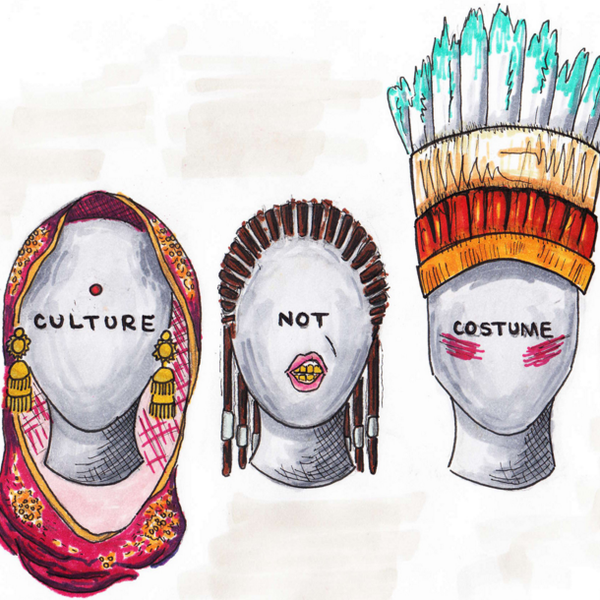
Cultural appropriation is the adoption or use of elements or subpieces of one culture by members of another culture. Cultural appropriation is often viewed as a controversy, usually when elements of a minority culture are used by members of the current cultural majority. This phenomenon is seen as unjustly oppressing the minority culture or stripping it of its group identity and intellectual property rights. In this viral video the woman asks a white peer, “Are you Egyptian?” because of his dreadlocks. He then asks her, “Are you?” Cultural appropriation is of course hugely a problem for minority groups and challenges their sense of identity and sense of belonging in the United States. But are dreadlocks “black”? What does it that mean — for something to be “black”? There is no simple answer, as race is a social construct and not actually a real thing.
Dreadlocks are not historically just a “black” culture hairstyle. The locking of the hair in this style comes from both the Rastafarians of Jamaica as a symbol of masculinity and power, and further, to Indian sages and yogis to express the renouncing of the world and all possessions. Ancient Caucasians sported dreadlocks too at times due to the lack of necessity for personal hair grooming in some subcultures of Europe. Dreadlocks are not inherently just for black people and have existed in many cultures around the world at various times. So modern Caucasians did not steal this style. Are they now adopting this symbol of black masculinity and power, while mainstream media still vilifies actual black masculinity and power? Yes, to put it simply. And that is the root of the anger with cultural appropriation that many African-Americans rightfully have. The world now tells us that black is OK in society, just not black people.
Diversity is beautiful
The behavior seen going on at San Francisco state in this viral video caused a lot of outrage, but it was followed by a really important conversation. If we want to start an open narrative about cultural appropriation, we should do so without animosity or mockery. Let’s not alienate our audience before we start. All any of us really want is to be heard. And if we believe in our truth, then we should also believe that our words will be received. And that white student at San Francisco State wanted to be heard too. Let’s listen to each other. America is a beautiful melting pot of cultural and ethnic diversity. That diversity is what makes us great. Let’s all experiment with and learn from each other’s culture, and learn to love as well as respect this wonderful diversity which gives character and beauty to our world.